TL;DR
- Many pastors fear AI will write their sermons, diluting their unique anointing.
- This article clarifies that AI should not originate ministerial content but instead free up pastors from administrative burdens.
- By handling tasks like transcription, content repurposing, drafting, and archive searches, AI enables pastors to dedicate more time to prayer, study, and direct ministry—the truly sacred work.
- This stewardship-focused approach ensures AI serves the pastor, not replaces them, protecting their authentic voice and theological tradition.
In this article
- 01"I Don't Want a Robot Writing My Sermons" — and Other Things Pastors Say Before We Have an Honest Conversation About AI
- 02The Real Question Under the Surface
- 03What AI Actually Does Well in a Ministry Context
- 04The Six Lines I Will Not Cross — and Neither Should You
- 05Where AI Gives Pastors the Biggest Return
- 06Where AI for Pastors Goes Wrong
- 07A Starting Point for This Week
- 08The Deeper Issue Behind All of This
- 09What to Do Next
- 10Frequently Asked Questions
01"I Don't Want a Robot Writing My Sermons" — and Other Things Pastors Say Before We Have an Honest Conversation About AI
The sentence I hear most often when I sit with pastors and church leaders is some version of this: I don't want a robot writing my sermons.
I understand it. I really do. And I want to say clearly at the outset that I agree with the instinct underneath it. But what I have come to learn, through many of these conversations, is that the fear underneath that sentence is rarely about AI writing sermons at all. What pastors are actually protecting, and rightly so, is something much more specific and much more valuable. They are protecting the anointing. The prayed-over, lived-in, costly voice that took fifteen or twenty years of obedience, failure, study, and suffering to develop. The voice that sounds like them because it came through them — through their history with God, their particular congregation, their way of seeing the world through Scripture.
That is not a small thing to protect. That is exactly the right thing to protect.
And what I want to offer in this article is what I have come to see, working with pastors and Christian messengers inside the Kingdom Builders AI Studio™, about what AI actually does, what it should never do, and where it gives ministry leaders genuine help without asking them to surrender the things that matter most.
02The Real Question Under the Surface
When a pastor tells me they do not want AI writing their sermons, I usually ask a follow-up question. I ask what they actually spend their week doing beyond sermon preparation, and what that costs them.
The answer is almost always the same. They are spending hours every week on things that have nothing to do with preaching, pastoring, or the prophetic work of ministry. Administrative writing. Social media posts that someone else drafted and they quietly cringe at. Newsletter copy. Event descriptions. Follow-up emails for every conference they attend. Registration pages. Show notes for a podcast. Speaker bios that need updating every six months.
None of that is sacred work. Most of it is the administrative weight that sits underneath the sacred work and slowly drains the time and energy that was supposed to go toward the message.
This is not a small problem, and the research is beginning to catch up with what those of us who serve pastors have been observing for years. According to Barna's State of Pastors, Volume 2, sixty percent of pastors had significantly doubted their calling in the previous year, and as recently as 2025, one in four U.S. Protestant senior pastors said they had seriously considered leaving full-time ministry. The reasons are complex and not reducible to administrative overload, but anyone who has sat with pastors honestly knows that the slow accumulation of non-pastoral work plays a part. The hours that were supposed to belong to prayer, study, and the people quietly disappear into tasks that no one was called into ministry to do.
What AI is genuinely useful for, when it is used inside the right boundaries, is taking a significant portion of that weight off the pastor and giving those hours back. Not so the pastor can do less, but so they can do more of the thing that only they can do: preach, pastor, pray, lead, disciple, think, create.
That is a stewardship argument, not a technological one. And it is the argument I want us to think carefully about together.
03What AI Actually Does Well in a Ministry Context
I want to be precise here, because the hype around AI in ministry, as in everything else, tends to either overstate what the technology does or dismiss it without engaging what it actually offers. Neither extreme helps.
When I strip away the marketing language and look at what AI genuinely does well inside a ministry context, what I see is that there are essentially four things.
The first is listening and transcription. AI can turn your spoken sermon into accurate written text quickly, reliably, and at very low cost. This matters enormously because the sermon, for most pastors, is the primary output of the week. It is where the revelation is, where the theological weight sits, where the illustrations live, where the pastoral heart is most fully expressed. And yet for most of church history, the moment the service ended, most of what was said was functionally lost — available only to those who were in the room, preserved at best on a low-quality recording, inaccessible to anyone who was not there that morning.
Transcription changes that. It turns what was spoken into text that can be worked with, structured, refined, and extended. It is the foundation for almost everything else I am about to describe.
The second is reshaping what you have already said. This is the part that surprises pastors most, in my experience, and I think it is the most important one to understand correctly. The AI is not originating content here. What it is doing is helping you take what you have already preached — your words, your theology, your illustrations, your framework — and reorganise it into a different form. A chapter. A devotional. A social post. A workshop outline. A blog article. The preaching has already happened. The revelation is already present in the transcript. What the AI provides is the structural capacity to extend that preaching into other formats without you having to start from scratch every time.
The third is drafting the administrative material. Show notes, event descriptions, registration page copy, speaker bio updates, follow-up emails, workshop outlines, run-sheets — all of it. None of it is theologically weighty. All of it takes time. AI can draft it well, and the pastor edits and approves before anything goes out. The time saving here is not marginal. For a ministry that is producing regular content across multiple channels, it can be the difference between a team that is barely coping and a team that has margin.
The fourth is searching your own archive. This is a capacity that barely existed a few years ago and that many pastors do not yet know how to use. What I have come to see is that this is one of the most underrated functions of AI for ministry. If you have a transcribed library of sermons — even fifty or a hundred messages — AI can search across that library in ways that would have required hours of manual work. You can ask it to find every time you preached on a particular text, every illustration you used about a particular theme, every time you addressed a specific pastoral question. The archive stops being a filing cabinet that is too large to navigate and starts becoming a searchable resource you can actually draw from.
Proverbs reminds us to "know well the condition of your flocks, and give attention to your herds" (Proverbs 27
). For most pastors I work with, that injunction applies just as truly to the archive they have built across years of faithful preaching. Capital that you cannot find is capital you cannot deploy.Those four things are real, useful, and honest. That is what AI does in ministry.
04The Six Lines I Will Not Cross — and Neither Should You
Before we go any further, I want to be clear about something. I build AI tools for Christian leaders. That is the work of Kingdom Builders AI Studio™. And yet I have come to believe that the most important contribution I can make to the conversation about AI in ministry is not to tell pastors how much AI can do. It is to be clear about where it must not go.
There are six lines I will not cross, and I would encourage any pastor or ministry leader to hold them firmly.
The first line is that AI does not author your message. The sermon is not a content object. It is a spiritual act. It is the result of hours in the Word, time on your knees, attentiveness to your congregation, the slow work of the Holy Spirit pressing a particular text onto a particular heart for a particular moment. AI can transcribe, restructure, and surface what you have already said. It cannot originate. The well of revelation is the Holy Spirit and your obedience to the Spirit, not a language model. The moment a pastor begins feeding a verse and a theme into a generator and preaching the output, they have not saved time. They have abandoned their post.
The second line is that AI does not pastor your people. I have seen tools marketed to churches as pastoral care assistants — chatbots that can answer congregation members' questions, provide counsel, follow up after difficult conversations. I understand the appeal for an overstretched leader. But pastoral care is not a function that can be delegated to a machine. It is a relational act rooted in genuine knowledge of a person, genuine concern for their soul, genuine accountability before God for what is said. A chatbot answering someone's marriage crisis question with a Bible verse is not pastoral care. It is a category error that can cause real harm to vulnerable people who deserve better.
The third line, related to the second but distinct from it, is that AI does not handle prayer requests, confession, or anything that carries the weight of pastoral confidentiality. This is a line I am watching some churches begin to blur, often with good intentions, and I want to say plainly why I think it is dangerous. When a person brings a struggle to a pastor, what they are doing is something sacred. They are entrusting a part of themselves that they do not entrust to many other people, in a context shaped by covenant relationship, spiritual responsibility, and accountability before God. A chatbot has none of those things. It has no covenant relationship with the person sharing. It has no accountability before God for what is done with what is shared. It has data handling practices that are, in most cases, opaque to the very people who are baring their souls into it. To train believers to bring sacred things to a system that cannot bear them is to slowly malform their understanding of what confession, prayer, and pastoral care actually are. The convenience is not worth the cost.
The fourth line is that AI does not earn the trust your voice has earned. The reason your congregation listens to you, the reason anyone pays attention to what you preach or teach or write, is that they know something about you. They know you have lived through something. They know you are not performing. They know that the thing you are saying cost you something before it came out of your mouth. AI can mimic the structure of authority. It cannot create the substance of it. And if you allow AI to replace the part of your work that earned you the right to speak, what you will find is that the trust slowly drains away, even if no one can articulate exactly why.
The fifth line is that AI does not produce Scripture commentary that you then present as your teaching. This is a more subtle failure, but I see it often enough now that I think it deserves explicit attention. A pastor under time pressure asks a language model what a particular text means, takes the output at face value, and brings it into the pulpit or the article or the small group as though it were the fruit of their own study. The problem is not only that language models hallucinate, although they do, and with a confidence that makes the errors difficult to detect without serious study. The deeper problem is that what was meant to be formed in you, through wrestling with the text, was instead extracted from a machine. The teaching may be technically correct, but the teacher has been hollowed out. Dr John Dyer, a theologian-technologist at Dallas Theological Seminary who has thought about these questions longer than most, has argued for years that "technology is good, and it is never neutral under any circumstance" — meaning that every tool we use shapes us as we use it. The pastor who consistently outsources their study to an AI will, over time, find that something that used to be formed in them has stopped forming. AI can help organise what you have studied. It must not do the study on your behalf.
The sixth line is that AI does not flatten your theological distinctives into a denominational average. This is perhaps the most important line for pastors who care about the tradition they preach from, and it is also the easiest to miss until the damage is done. Language models do not know your theological tradition. What they do, by design, is average across an enormous range of sources, smoothing out distinctives and producing what is essentially a generic Christian voice. If a Reformed pastor lets AI rewrite their teaching without close supervision, the Reformed distinctives will quietly soften. If a Pentecostal pastor does the same, the charismatic specifics will quietly mute. The danger is not that the output is heretical. The danger is that it is generic Christian, and over time the pastor's teaching loses the particular tradition it came out of. The voice that took fifteen years to form gets smoothed into the voice of no one in particular. This is why, in the Studio, we build Voice DNA into the process before we produce any content. The AI must be trained on the pastor's own material — their transcripts, their writing, their language, their tradition — before it begins drafting on their behalf. That is not a technical detail. It is a theological one. The message must sound like the messenger.
Inside those six lines, there is still an enormous amount of room to work — and that is the room I want to spend the rest of this article describing.
05Where AI Gives Pastors the Biggest Return
A single sermon does not have to do a single job anymore
The cost of a sermon used to be one Sunday morning. You preached it. Ninety-five percent of your congregation never heard it again, and ninety-nine percent of the world was not in the room. By Wednesday, most of what you said had dissolved into the week.
That is a profound stewardship problem, in the sense that the revelation God gave you — the theological work, the pastoral insight, the illustrative power of the message — was meant to reach further than one hour on a Sunday. The tools simply did not exist to make that happen easily. And so pastors accepted it as the nature of the work.
What I have come to see, after years of sitting with church leaders, is that this acceptance was partly theological and partly structural. The structural problem is now solvable, and the parable of the talents (Matthew 25
–30) is the lens through which I have come to read what that means. The point of that parable is not that the servants were given different amounts. The point is that the master expected conversion. The one who buried what he had been given was not condemned for losing it. He was condemned for failing to put it to work. For most pastors I know, the sermon archive is the talent. And for most of church history, the structural means of converting that talent into something that travelled beyond Sunday morning simply was not available.That is no longer the case. With a transcribed sermon and the right tools, a single thirty-five minute message can become a clean edited transcript, a book chapter or the foundation for one, a five-day devotional email sequence, a small-group discussion guide, a week of social posts written in your actual voice, a short blog article, and two or three short-form video clips. The revelation is already present in what you preached. What changes is the capacity to extend its reach without requiring you to generate new content from scratch every time you want to reach a new format or a new platform.
The tools inside Kingdom Builders AI Studio™ are built specifically for this kind of work — not for generic content production, but for helping messengers extend what they have already said into forms that can reach further and last longer.
The book that is already inside your sermon archive
There is a pattern I have observed many times when I sit with pastors who have been in ministry for ten years or more. They carry a book. They know they carry a book. People have been telling them for years that they carry a book. And yet the book has not been written, because the act of writing a book feels like disappearing for a year — stepping away from the pulpit, the people, the daily work of ministry, and going somewhere to sit and write.
What I have come to understand is that for most preachers, the book is already preached. It exists inside the sermon archive — inside the series they taught on the subject that would become the book, inside the messages where they developed the central framework, inside the illustrations they have told ten times because they have never found a better way to say the thing. The content is there. What is missing is the architectural work of pulling it out of sermon form and structuring it into a manuscript.
This is the specific problem the Message-to-Book Builder™ is designed for. Not to write the book for the pastor — that misunderstands the whole point — but to help them extract what they have already preached, organise it into a coherent structure, and draft it in their voice, chapter by chapter, without losing the way they actually teach. The voice is preserved because the input is the pastor's own transcribed sermons. The AI is working with their material, not inventing new material on their behalf.
The social media problem most churches have quietly given up on
When I ask pastors about their social media presence, the answers tend to fall into two categories. Either they are posting nothing because the whole thing feels incompatible with the weight and character of their ministry, or someone else is posting on their behalf and they are not entirely comfortable with what goes out.
What has become genuinely available in the last two or three years is a third option — using AI to draft platform-appropriate posts from things the pastor has already preached, with the pastor's voice and theology preserved because the source material is the pastor's own words. The pastor does not write from scratch. The Studio works from the transcript, produces several post options, and the pastor edits and approves. Nothing goes out without review. The voice in the posts is the pastor's voice, because the source material is the pastor's words. What changes is the format — shorter, platform-appropriate, written to the rhythm of how each platform works — not the theology, not the pastoral heart, not the distinctiveness of the voice.
This matters because the people your message is meant to reach are on those platforms. They are not all in the room on Sunday. And a message that is only ever accessible to those who can make it to a building at a specific time is constrained by geography and schedule in ways that most pastors would not choose if they thought through the stewardship implications carefully.
Getting back the hours that speaking costs
For pastors who are also speaking beyond their own congregation — at conferences, events, other churches — the administrative weight of a speaking engagement is considerable. An invitation arrives. Then comes the series of emails: the speaker bio, the headshot, the intro script, the AV requirements, the travel logistics, the follow-up thank-you, the social posts before and after. None of it is spiritually difficult. All of it takes time, and that time tends to come out of the hours that were supposed to be reserved for the people who actually need the pastor.
AI can draft all of it. Not perfectly on the first pass, but close enough that the work becomes reviewing and adjusting rather than creating from scratch. For a pastor who speaks regularly outside their home church, recovering those hours each month is not a small thing.
06Where AI for Pastors Goes Wrong
I want to spend real time on the failure modes, because I think they are important and because I see them frequently enough to know they are not theoretical.
The first failure mode is using an AI sermon generator as a substitute for preparation. These tools exist. They will take a Scripture reference and a topic and produce something that looks like a sermon — outline, headings, illustrations, conclusion. What comes out reads like a sermon assembled by someone who has read about preaching but has never actually done it. There is no Hebrew or Greek depth. There is no pastoral knowledge of the specific congregation. There is no lived conviction behind the illustrations. There is no recognisable voice. The congregation will sense the difference, even if they cannot name it. They will sense it because what they are hearing has not cost the preacher anything, and they can feel that.
The second failure mode is what I described earlier as the slow flattening of voice. It is the most subtle of the failure modes, and in some ways the most damaging. It happens slowly. The pastor lets AI rewrite their newsletter copy, then their emails, then their social posts. Each individual output seems acceptable. But over six months, they read something they produced and it no longer quite sounds like them. The warmth is there, more or less. The structure is there. But something has flattened. Something that was specific to them — a particular way of landing a thought, a recurring turn of phrase, a pastoral instinct that showed up in how they introduced difficult ideas — has been replaced by the smoothed-out average of what the AI produces when it is not being held closely to a specific voice.
The third failure mode is something I have come to call the dependency drift. It is what happens when a pastor begins reaching for AI as the first response to any creative or administrative task, rather than as a tool used inside an intentional process. The pastor stops thinking through a structure on their own. They stop wrestling with a paragraph that is almost right. They stop sitting with the discomfort that often produces the clearest writing. The AI becomes a way of avoiding the slower, harder work that used to form them as a thinker and a communicator. The output may improve in volume. The pastor, as a thinker, does not.
07A Starting Point for This Week
I want to be honest about something. Most of the barriers I observe when pastors think about integrating AI into their work are not actually technological. They are psychological. The tool feels unfamiliar, or the category feels spiritually ambiguous, or there is simply not enough time in the week to learn something new when the sermon still needs finishing.
So I want to offer the simplest possible starting point. Not a transformation initiative. Not a strategy. Just one experiment.
Take the Capital Conversion Gap™ Diagnostic. It takes about five minutes, and what it will give you is something that I find most pastors do not have when they first sit with me — a clear picture of where the gap between what you carry and what is currently visible actually sits. Most pastors I work with discover, sometimes for the first time, that the issue is not what they thought it was. The problem is not that they need more revelation, or more time, or more faith. The problem is structural. The architecture for converting what they carry has simply never been built.
Once you can see the gap clearly, the next step becomes obvious. For some pastors, it is the Message-to-Book Builder™, because the book is already inside the archive and what is missing is structure. For others, it is one of the other Studio tools that addresses a different conversion problem. For others still, the next step is a conversation, which is what the Capital Conversion Call is for.
The point I want to make is that the loop I am describing throughout this article — capturing what you preached, extending it into other formats, doing so in a way that preserves your voice and theology and pastoral heart — is the loop the Studio was built around. You do not need to assemble a stack of separate tools and figure out how they fit together. The architecture exists, and it was built specifically for Christian messengers who want to steward what they carry without becoming someone they were never called to be.
08The Deeper Issue Behind All of This
I want to close with something that I think matters more than the practical question of which tools to use.
When I work with pastors and church leaders, I encounter the same pattern regularly. They have been in ministry for ten, fifteen, twenty years. They have preached hundreds of sermons. They have walked with people through the hardest seasons of their lives. They have accumulated theological understanding that has been tested by real situations, not just developed in classrooms. They carry wisdom that is genuine, formed through obedience and suffering and study and pastoral experience that cannot be replicated by anyone who has not lived it.
And yet almost none of that accumulated wealth of revelation, experience, and teaching is currently converting into anything that outlasts a Sunday morning.
The reason for this is not a lack of calling. It is not a lack of anointing. It is not a lack of desire to reach further and serve more. The reason is what I have come to call the Capital Conversion Gap™ — the distance between the spiritual capital a pastor carries and the visible Kingdom fruit that capital was deposited to produce. The gap is not spiritual. It is structural. The architecture to convert what a pastor carries into forms that can travel — books, courses, frameworks, workshops, digital tools, scalable pathways — has simply not been built.
Peter puts this responsibility plainly. "As each has received a gift, use it to serve one another, as good stewards of God's varied grace" (1 Peter 4
). The gift is given. The stewardship is required. And what I have come to see is that for many pastors, the bottleneck is not the gift and it is not the willingness to steward it. The bottleneck is the architecture for converting it.AI, used faithfully and within the right theological lines, is one of the tools that can help close that gap. Not because it creates new capital. The capital is already there, in the archive of sermons, in the years of pastoral wisdom, in the theological clarity that has been forming for decades. The reason it helps is that it provides, for the first time in history, a practical means of extending what was preached on one Sunday into forms that can reach people who were never in the room — and can keep reaching them long after the preacher has moved on to the next message.
That is the real argument for AI in pastoral ministry. Not efficiency. Not productivity. Stewardship. The responsibility that every pastor carries before God for what has been entrusted to them — not just to receive it, not just to preach it once, but to deploy it as faithfully and as far as the tools and opportunities available to them allow.
The tools have changed. The responsibility has not.
09What to Do Next
If what I have described here resonates with where you are, I would encourage two things.
The first is to take the Capital Conversion Gap™ Diagnostic. Five minutes. It will show you where the gap between what you carry and what is currently visible actually sits — and which conversion problem to address first.
The second is to explore the tools inside Kingdom Builders AI Studio™, which are built specifically for pastors, authors, and messengers who want to extend their message without losing their voice.
And if you would rather talk through your specific situation first, you can book a Capital Conversion Call and we can work through what faithful stewardship of your message looks like from where you currently are.
10Frequently Asked Questions
Will AI make my sermons sound generic or inauthentic?
Not if it is used correctly. The risk of generic output is real, but what I have come to see is that it arises when AI is asked to generate content without being grounded in the pastor's own material. When AI is working from a pastor's own transcribed sermons and trained on their voice and language, the output reflects their voice, because it is built from their words. The work of editing and approving what comes out ensures that nothing reaches the congregation or the public that does not sound like the pastor who produced it. This is why we build Voice DNA into every workflow inside Kingdom Builders AI Studio™ before any content is produced.
Is using AI for ministry preparation spiritually legitimate?
That is a question worth asking carefully, and I am glad when pastors bring it with genuine seriousness rather than dismissing it either way. Scripture is clear that stewardship of what God deposits in us is not optional — it is a moral and spiritual responsibility. The parable of the talents is not primarily about money. It is about what we do with what we have been given. If a tool exists that allows a pastor to reach further with the revelation they have received, to make their teaching accessible to people who were not in the room, to extend their pastoral influence beyond the geographical and temporal limits of a Sunday morning — refusing to use that tool on principle requires a stronger argument than most critics have offered. The question is not whether to use tools, but which tools, within which boundaries, and with what degree of care. For pastors who want to think this through more carefully, the ERLC's recent guide "The Work of Our Hands: Christian Ministry in the Age of Artificial Intelligence" is a thoughtful resource worth engaging.
Where should a pastor begin if they are completely new to AI tools?
What I have come to recommend, after working with many pastors at this exact starting point, is to begin with the Capital Conversion Gap™ Diagnostic. Most pastors who are new to AI assume the question is which tool should I start with. What they discover, after the diagnostic, is that the question they really needed to answer was which conversion problem am I actually trying to solve. Once that is clear, the right tool becomes obvious, and the time spent learning it pays off because it is connected to a real problem rather than a generalised curiosity.
What is the Capital Conversion Gap™ and why does it matter for pastors?
The Capital Conversion Gap™ is a framework that diagnoses the distance between the spiritual capital a believer carries — revelation, experience, vocational wisdom, relational trust, created works like sermons and teaching materials — and the visible Kingdom fruit that capital is meant to produce. For pastors specifically, the gap often shows up as a rich archive of teaching that has never become a book, a framework that has never become a course, a pastoral wisdom that has never been structured into a form that can reach beyond the walls of one congregation. The gap is not a spiritual problem. It is a structural one. And the purpose of the tools and frameworks I build is to help close it.
About the author
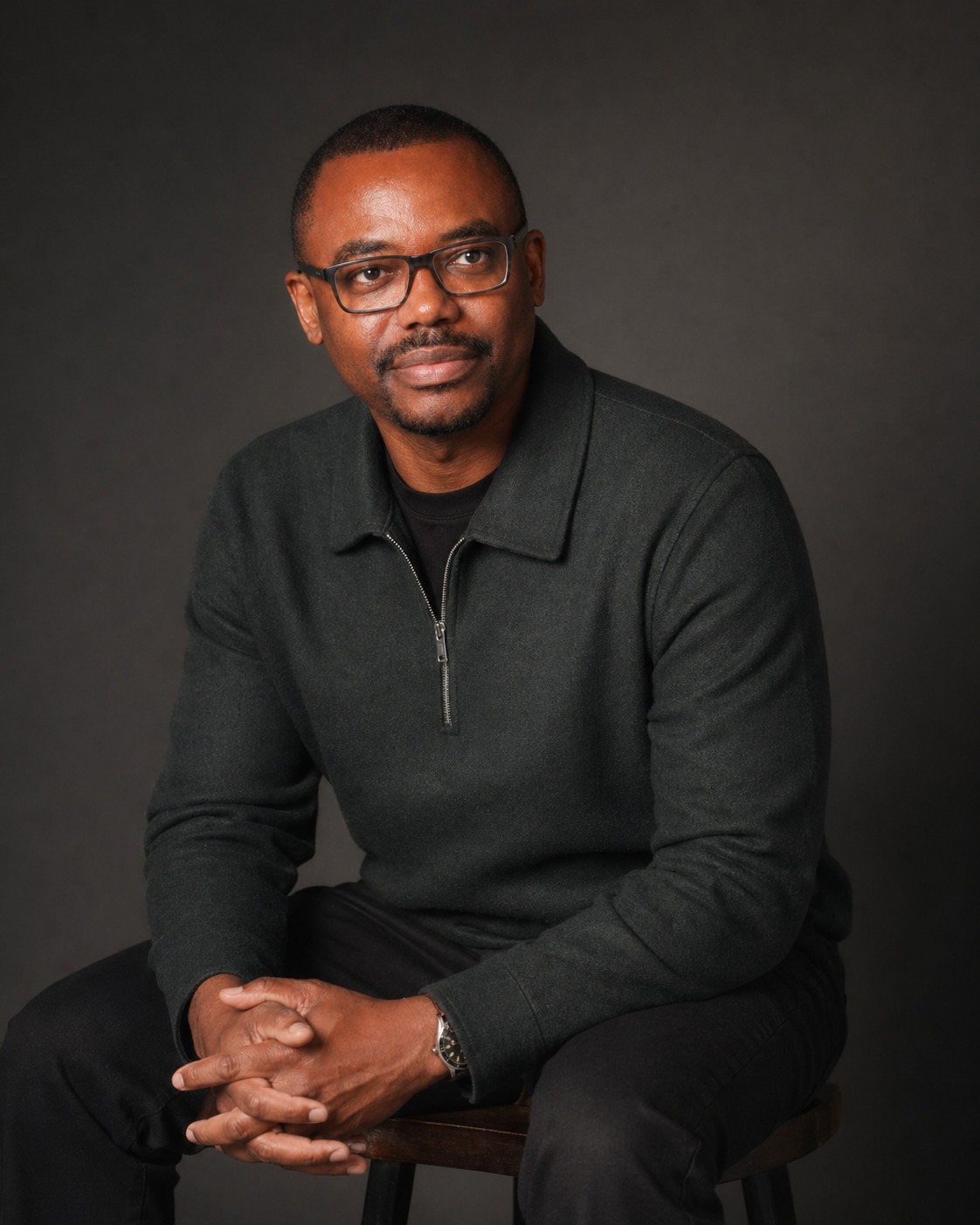
Dr Uche Okere
Dr Uche Okere is a pastor, university academic, coach and founder of Kingdom Builders AI Studio. He helps pastors, authors, speakers and faith-driven builders convert spiritual capital into visible Kingdom impact through message architecture, AI tools, workshops and practical implementation.
Explore the Studio