TL;DR
- Supply real examples instead of relying on adjectives.
- Separate source authority, theological boundaries and style preferences.
- Require review of meaning as well as tone.
In this article
- 01Begin with the material the draft may use
- 02State theological boundaries in ordinary language
- 03Show what your voice sounds like
- 04A practical writing-brief structure
- 05Review a short sample before a whole manuscript
- 06Separate editorial judgment from factual checking
- 07Keep the brief alive during revision
- 08Questions about AI and voice
- 09Start with a clear book direction
“Write in my voice” is a reasonable desire and an incomplete instruction.
Your voice involves more than vocabulary. It includes the distinctions you make, the way you handle Scripture, the degree of certainty you give a claim and the posture you take towards a reader. An AI-generated paragraph can use familiar phrases while expressing a conclusion you would never defend.
An AI writing brief should therefore identify the sources to use, the theological and editorial boundaries to preserve, representative examples of your writing and the decisions that must return to you. It can improve the instructions given to a tool; it cannot guarantee a faithful result.
In brief
- Supply real examples instead of relying on adjectives.
- Separate source authority, theological boundaries and style preferences.
- Require review of meaning as well as tone.
01Begin with the material the draft may use
Name the approved sources. These might be selected sermon transcripts, author-written notes, existing chapters or a statement explaining your current position.
Tell the tool what to do when the sources do not contain an answer. A useful rule is: “Mark the gap for the author. Do not invent a story, quotation or theological explanation to fill it.”
This instruction is more concrete than “be accurate”. It defines the behaviour you want at the point where uncertainty appears.
Supplying material in a prompt or document is not, by itself, evidence that a custom model has been trained. Describe the workflow accurately. The practical question is whether the tool can use the relevant material and whether you can check its output against that material.
02State theological boundaries in ordinary language
Avoid relying only on a denominational label. Authors within the same tradition may use language differently or emphasise different qualifications.
Write the distinctions that matter for this book. For example: “Distinguish the biblical text from the author's application”; “Do not turn an invitation to faithful action into a guarantee of financial success”; or “Do not present an interpretive judgment as a direct quotation from Scripture.”
These are examples of possible boundaries, not a complete theological framework. Your own brief must reflect the convictions and scope of your actual project.
Where a boundary requires a fuller explanation, supply one. A rule that is clear to you may be ambiguous to a reader or a writing tool.
03Show what your voice sounds like
Choose a few representative passages you have written or spoken. Include different kinds of work: explanation, application and a careful qualification.
Add a note about what to preserve. You might value connected reasoning, direct questions used sparingly, a pastoral tone that challenges without humiliating, or the habit of explaining a term before applying it.
Also identify what should not be copied mechanically. A phrase that appears naturally in one passage can become irritating when repeated in every chapter.
Your examples should teach the tool how you reason and address people, not supply a handful of slogans to scatter through otherwise generic prose.
04A practical writing-brief structure
Use the following structure as a working document:
Purpose: What this chapter helps the reader understand.
Reader: Their situation, starting knowledge and relevant concerns.
Approved material: The exact sources the chapter may draw on.
Core argument: The claim the chapter must develop.
Theological boundaries: Distinctions and qualifications that must remain intact.
Voice examples: Author passages with notes on what makes them representative.
Prohibited inventions: Personal experiences, client outcomes, quotations, statistics and unsupported claims.
Uncertainty rule: Flag missing evidence or unclear meaning for author review.
Review standard: Compare the draft with the brief and its sources before accepting it.
This is an editorial specification. It remains useful even if you change tools because it records the decisions that belong to the author.
05Review a short sample before a whole manuscript
Begin with one passage that contains a real distinction or application. A generic introduction is a weak test because it can sound acceptable while revealing little about fidelity.
Compare the sample with your source. Has an important qualification disappeared? Has the tone become more accusatory? Has the paragraph converted a possibility into a promise? Has it added a story because the instructions asked for an engaging opening?
Correct the brief when the problem comes from unclear instructions. Correct the draft when the instruction was clear but the output did not follow it.
A good sample does not prove that every later chapter will be faithful. Continue reviewing throughout the work.
06Separate editorial judgment from factual checking
A passage can sound like you and still be wrong. Voice review and source verification answer different questions.
For factual, biblical and personal material, consult the original source. Our fact-checking guide explains how to organise that process. For the broader question of responsibility, see the ethical use of AI by Christian authors.
The author's name should represent the author's judgment. Assistance with drafting does not change that responsibility.
07Keep the brief alive during revision
As you review, record the corrections that matter across the book. Perhaps a term is repeatedly misunderstood, or an instruction about application is producing formulaic endings.
Update the brief with a specific explanation and a corrected example. Then check earlier chapters for the same issue.
This is more useful than collecting a long list of vague prohibitions. The aim is to make faithful choices easier to repeat while preserving the flexibility of good writing.
Key takeaways: Give AI a defined task and trustworthy material. Describe your theological distinctions explicitly. Judge the output rather than trusting the instruction alone.
08Questions about AI and voice
Can a prompt guarantee theological accuracy?
No. Instructions can guide the work, but the result still requires appropriate review.
Should I imitate a well-known Christian author?
Build the brief around your own work and the needs of your reader. Clear writing does not require borrowing another author's identity.
Can I use the same brief for every book?
Reuse stable voice preferences, but revise the reader, sources, argument and theological scope for each project.
09Start with a clear book direction
If your material is substantial but the book's purpose remains unclear, join the free Live Book Brief session. A clearer reader and argument will improve the instructions you give any writing assistant.
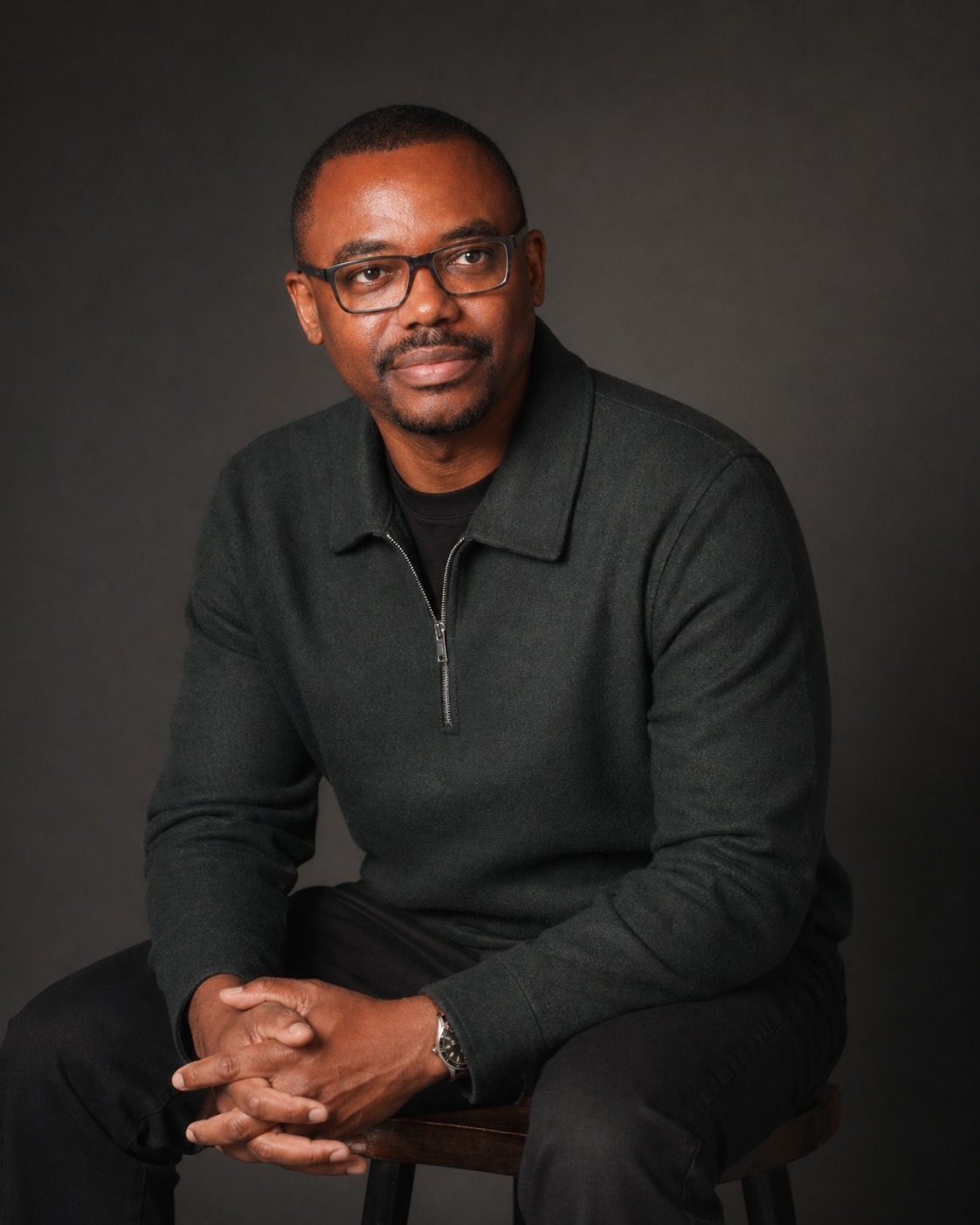
Dr Uche Okere
Dr Uche Okere is a pastor, university academic, coach and founder of Kingdom Builders AI Studio. He helps pastors, authors, speakers and faith-driven builders convert spiritual capital into visible Kingdom impact through message architecture, AI tools, workshops and practical implementation.
Explore the Studio