TL;DR
- Check AI-assisted writing against its actual sources.
- Verify Scripture, quotations and personal stories, then review the whole argument for accuracy and proportion.
In this article
- 01Begin with a source-based draft
- 02Check Scripture wording and interpretation separately
- 03Treat personal stories as factual material
- 04Open the source behind every external claim
- 05Keep a simple claim-checking record
- 06Use AI to help you inspect, while retaining the decision
- 07Read for the argument after checking the details
- 08Key takeaways
- 09FAQ
- 10Build the book around material you can stand behind
A chapter can sound like you and still contain something you should never have said.
That is the concern I want us to take seriously when using AI to develop a Christian book. We can spend so much attention on whether the writing feels natural that we overlook a quotation we cannot trace, a biblical claim that has quietly changed, or an illustration that reads like personal testimony even though it never happened.
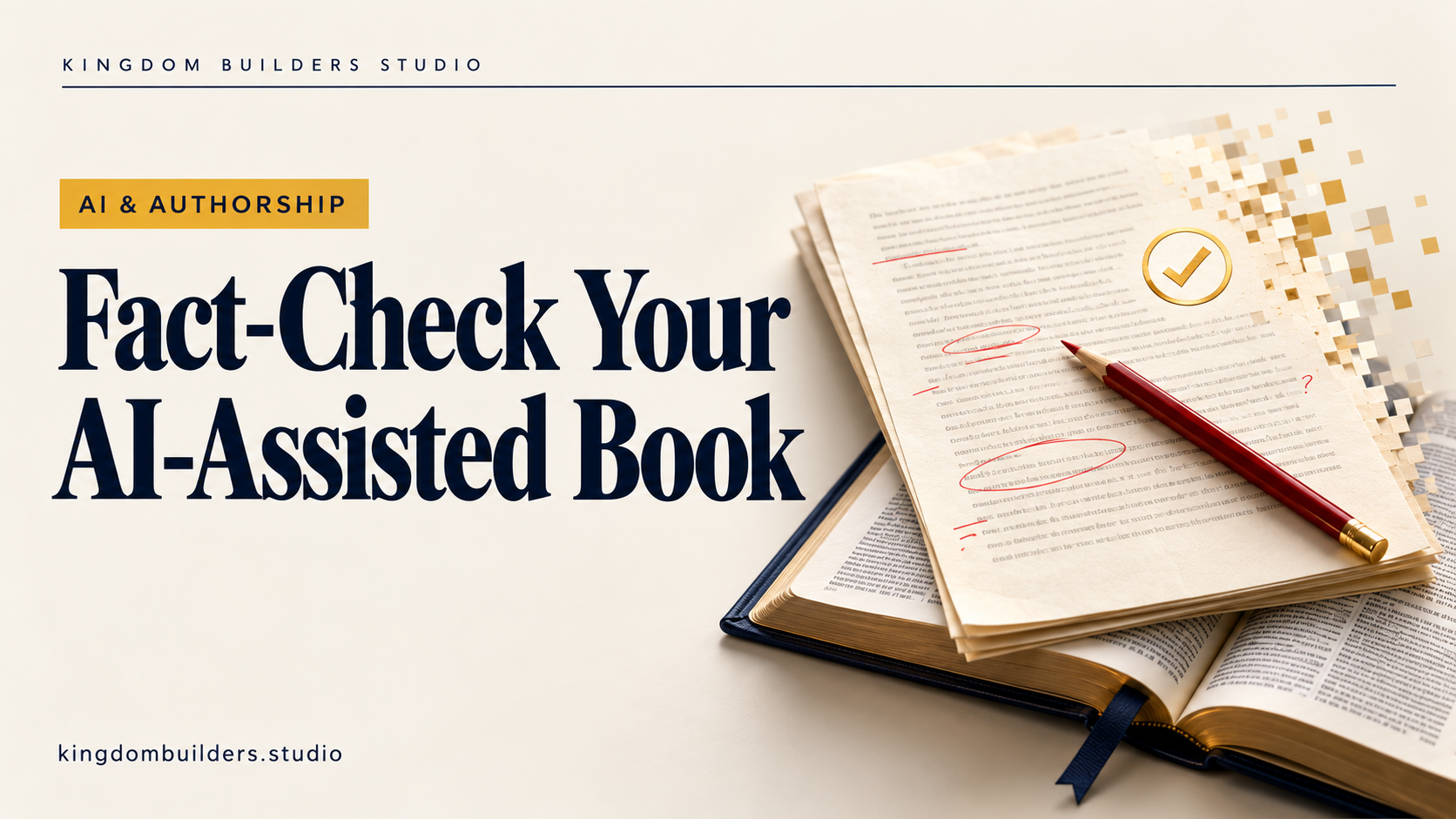
To fact-check AI-assisted book content, compare claims with their actual sources, check every Scripture quotation in its stated translation, verify quotations and factual references, and review personal stories against what you really supplied. Then read the chapter again for meaning, because a collection of accurate sentences can still support an argument that needs correction.
This work belongs within authorship. It deserves time in the writing process, particularly when readers may receive your words as spiritual guidance.
01Begin with a source-based draft
The first useful question is where the content came from. If your draft developed from sermons, notes, teaching recordings or a framework, keep those sources available as you edit. You need a way to compare the chapter with the material it is meant to represent.
For each major section, identify the source that supports it. You do not need to put a reference after every sentence of your own teaching, but you should be able to distinguish what you originally supplied from what was added during drafting.
Some additions will be legitimate editorial work: a transition, a clearer definition or a question that helps the reader follow the argument. Other additions may introduce new factual claims, illustrations or theological conclusions. Those require a different kind of attention because they change the substance of what you are saying.
The National Institute of Standards and Technology describes confident but false AI output as confabulation, and explicitly includes invented citations among the risks in its Generative AI Profile, section 2.2. A reference that looks convincing therefore needs to be opened and checked. Its appearance on the page cannot establish that it exists or supports the claim.
02Check Scripture wording and interpretation separately
When a draft includes a Bible quotation, locate the passage in the translation named. Check the reference, wording and any omitted phrases. Make sure a paraphrase has not been placed inside quotation marks as though it were the exact text.
That settles the wording question. It does not settle the interpretation.
Read the surrounding passage and ask what the biblical writer is addressing. Who is speaking? To whom? What qualifies the statement? Does your chapter preserve that context, or has a sentence been detached from it to support a point you already wanted to make?
For example, Ephesians 2
–22 describes believers being built together as God's dwelling place. If a draft uses that passage to discuss the church's shared life, its corporate emphasis matters. An edit that quietly turns the whole application into individual self-improvement may retain the reference while losing something central to the passage.You also need to recognise where your interpretation is disputed or where you are making an application beyond the passage's immediate setting. A thoughtful Christian book can make a case with conviction while showing how that case is being developed. It should not present an inference as a direct quotation from God.
If a substantial theological claim remains uncertain, return to the text and appropriate study resources, or ask a qualified reader to review it. The fluency of the paragraph should not decide the matter.
03Treat personal stories as factual material
A personal story deserves the same care as a statistic. If the chapter says you counselled someone, received a particular response, or experienced an event, that claim needs to come from your own account of what happened.
Check especially for apparently harmless details added to make a scene feel more alive. A time of day, a room description, an emotional response or a line of dialogue can make a passage read well while also turning it into a story you did not tell.
If you remember the substance of a conversation but not the precise words, write that honestly. You can explain what the person was asking without manufacturing a polished quotation. If an example is hypothetical, identify it as such before the reader has reason to mistake it for testimony.
Other people's experiences need care too. A story may be accurate and still be inappropriate to publish. Consider whether the person has agreed to its use and whether identifying details expose circumstances they expected you to keep private. Where that question is unresolved, leave the story out of the publication version until you have dealt with it properly.
For me, this is part of respecting the people a ministry serves. Their lives should never become convenient material simply because a chapter needs a stronger opening.
04Open the source behind every external claim
For a quotation from an author, find the actual work and verify the words in context. Record enough information to locate it again, including the edition and page or a stable online location where available. A quotation repeated on several websites may still be wrongly attributed.
For a statistic, check what was measured, who was included and when the research was carried out. Then compare that with the sentence in your draft. A finding about a particular group does not automatically support a claim about all pastors, all churches or all readers.
Dates, names and historical details also deserve checking. If the detail contributes little to the argument and you cannot verify it, removing it may improve the chapter. You do not need an impressive-sounding fact in every section to write with authority.
Use the source that actually establishes the point wherever you can: the original publication, the research itself, an official record, or the named author's own work. When you cannot access the source, keep the claim unresolved instead of treating a plausible summary as confirmation.
05Keep a simple claim-checking record
You do not need a complicated research database to begin. A short table beside the manuscript can make unresolved work visible and prevent the same question from being forgotten between edits.
| Item in the draft | What needs checking | Decision |
|---|---|---|
| Scripture quotation | Exact wording, translation and surrounding context | Keep, correct or reconsider the interpretation. |
| Named quotation | Original source, exact words and meaning | Attribute accurately or remove. |
| Personal story | Whether it happened as described and is suitable to share | Confirm, rewrite honestly or omit. |
| Statistic or historical claim | Reliable source and the scope of what it supports | Keep with support, narrow or remove. |
| Added explanation | Whether it follows from your teaching and sources | Accept, revise or reject. |
Add the location in the manuscript and a note of the source you consulted. Keep unresolved items clearly marked in your working copy, then resolve or remove them before publication. A hidden uncertainty can easily survive several rounds of polishing because nobody remembers why the sentence was questioned.
This record also gives an editor or theological reviewer a more useful task. They can inspect the actual points of concern instead of being asked vaguely whether the whole book seems fine.
06Use AI to help you inspect, while retaining the decision
An AI assistant can help flag statements that appear to need support, compare supplied passages, or notice inconsistencies between chapters. That can save you time, provided you inspect the results against the sources yourself.
A useful instruction is to ask it to identify factual claims, personal testimony, quotations and theological assertions that need review, and to mark any item it cannot verify from the supplied material. Asking for uncertainty to remain visible is more useful than asking for a confident verdict on everything.
You can also ask it to identify where a revision has changed the strength of your language. "May help" becoming "will transform" is a small edit with a substantial effect on the promise you are making. A qualified statement about some readers becoming a universal claim deserves attention even when the underlying topic has not changed.
Our explanation of how Kingdom Builders Studio uses AI states the intended safeguards and the author's review responsibilities. Instructions and review stages support careful authorship; they do not make checking unnecessary. The author still needs to decide whether the finished words are accurate, faithful to the sources and appropriate to publish.
07Read for the argument after checking the details
Once the individual claims are checked, read a complete chapter without stopping to polish sentences. Ask what a reasonable reader would conclude from it.
Does the opening promise something the chapter never establishes? Does an illustration carry more weight than the biblical explanation? Has the chapter moved from a limited observation into a sweeping conclusion? Does the application respect the qualifications you carefully included earlier?
This matters because truthfulness includes proportion. A real example can be used to imply that an outcome is typical when you have no basis for saying so. A genuine quotation can be placed beside another idea in a way that makes its author appear to support something different.
At this stage, ask a trusted reader to explain the chapter back to you. What do they believe you are arguing? What action do they think you are recommending? Their response can reveal a gap between the meaning you intended and the meaning you actually communicated.
The wider question of ethical AI use for Christians includes this willingness to remain responsible for the work. Assistance can be useful while authorship remains demanding.
08Key takeaways
- Compare the manuscript with the sources it claims to represent.
- Check Scripture wording and interpretation as separate tasks.
- Verify stories, quotations and factual claims rather than accepting polished prose as evidence.
- Resolve uncertain claims, then review the argument as a whole before publication.
09FAQ
Is asking another AI to check the chapter enough?
It can provide an additional review, but it does not replace consulting the relevant sources. Treat its findings as suggestions to investigate, including any claims it says are already correct.
Do I need a reference for every sentence?
No. The aim is to substantiate claims that depend on external evidence and distinguish your own teaching, interpretation and experience. Exact quotations, specific facts and research claims need appropriate support.
Can I keep a good illustration if it was invented?
You can use a suitable hypothetical illustration if you make its status clear. It must not be presented as your personal experience, someone else's testimony or a historical event.
What should I do with a claim I cannot verify?
Remove it, narrow it to what your sources support, or pause that part of the manuscript while you investigate. Do not replace uncertainty with more confident wording.
10Build the book around material you can stand behind
If you are beginning a book from sermons, teaching or professional experience, start by getting clear about the material you have and the book it can responsibly support. That is a useful foundation for later drafting and review.
The Free Live Book Brief session helps you work towards a defined reader, promise and chapter shape. Bring your own material and the questions you still need to resolve. A clear starting point makes it easier to recognise when a draft is faithfully developing your message and when it has wandered beyond it.
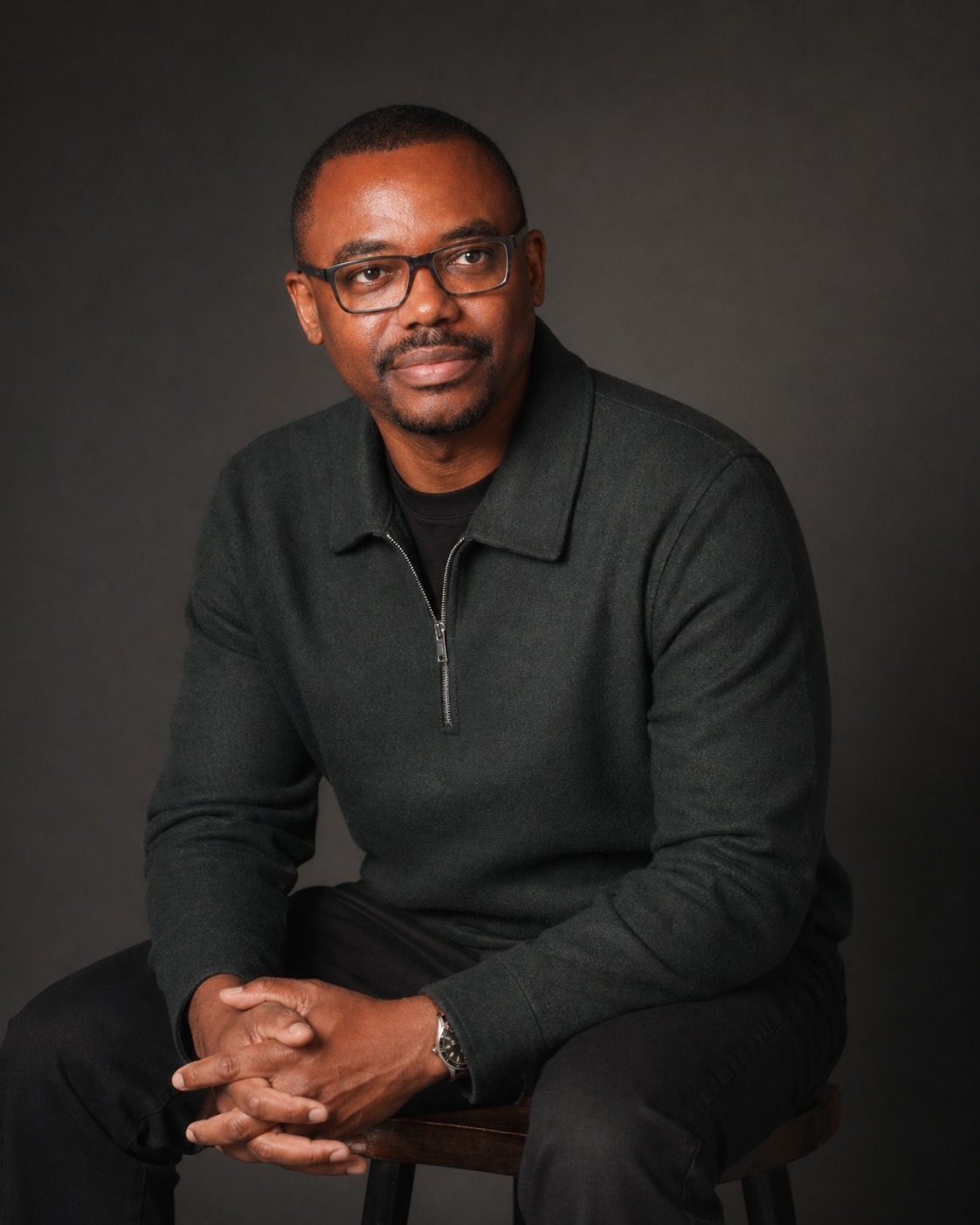
Dr Uche Okere
Dr Uche Okere is a pastor, university academic, coach and founder of Kingdom Builders AI Studio. He helps pastors, authors, speakers and faith-driven builders convert spiritual capital into visible Kingdom impact through message architecture, AI tools, workshops and practical implementation.
Explore the Studio