In this article
What should you look for in your book interior design? I’d begin with the pages someone will spend most of their time reading. Check that the text is comfortable at the intended size, that the headings make sense and that quotations don’t make the teaching difficult to follow. You can give useful feedback without knowing how to design the pages yourself.
It’s exciting to see a chapter opening that looks like a real book. But turn a few pages further. That’s where the reader will be spending time with what you’ve written. The ordinary pages deserve just as much attention as the opening.
Key takeaway: read several pages at the size the book will be printed. An attractive screenshot won’t tell you everything you need to know.
01Tell the designer how people will use the book
Think about how you want people to read it. A devotional may be read a little at a time, with space to pause and pray. A teaching book may need people to follow a longer explanation. A practical guide may need exercises they can find again easily. Explain that to the designer.
Include who the book is for and what appears regularly in it. Are there long Scripture quotations? Reflection questions? Diagrams? If small print would make it difficult for your readers, say so early. It’s better to discuss that while looking at samples than after the whole interior has been prepared.
You don’t have to choose every measurement. Give the designer a clear idea of the reader and ask them to show you how their proposal would work.
02Judge the ordinary spread
Request two facing pages with normal prose. Read several paragraphs at their intended size. Notice whether your eye finds the next line comfortably, whether the space near the binding feels cramped and whether emphasis is easy to distinguish from the main text.
Check whether you can tell the different parts apart. Is this a heading or a line of emphasis? Are these words from Scripture or the author’s explanation? The design should help you answer those questions without having to stop and work it out.
There isn’t one font size or margin that suits every book. Ask why a choice works for yours. If the answer is mainly that it’s fashionable, you may need a more useful conversation about readability.
03Test the difficult page
Ask to see a page with the kinds of material you actually use. A sample containing only a few short paragraphs won’t show what happens to your longer quotations, notes or reflection questions.
Consider this illustrative case: a chapter contains several short Scripture quotations followed by explanation. A sample that makes every quotation enormous may look striking, but it could fragment the argument over many pages. A more restrained treatment may preserve both the importance of the quoted text and the connection between passage and explanation.
Look at whether you can still follow the point. A large quotation may be attractive, but it shouldn’t pull the reader away from the explanation it belongs to.
04Look at an actual working page
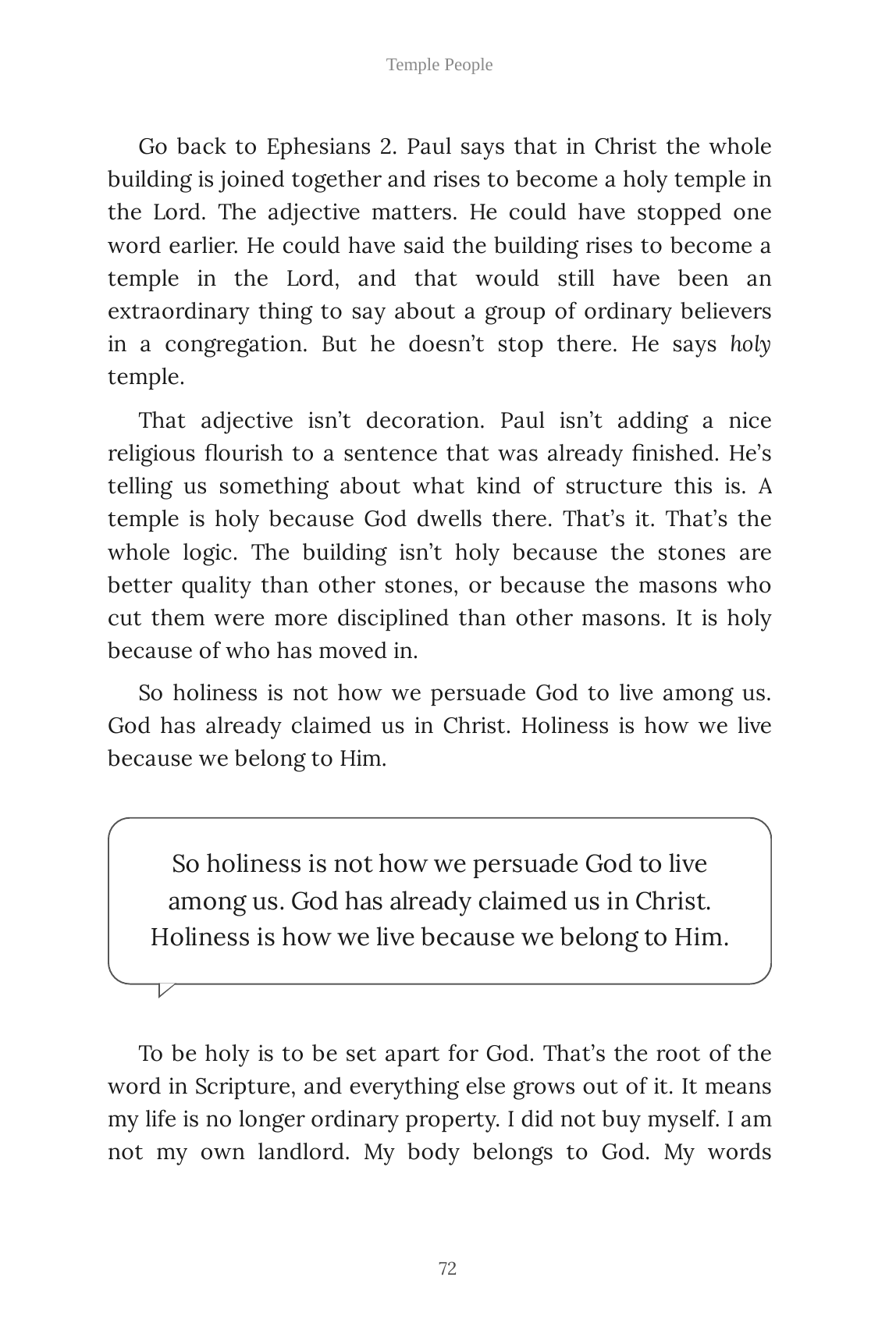
This extract is from the 31 October working proof of Temple People. The passage explains that holiness follows belonging to God; part of it appears again as a displayed quotation. Read the paragraph, then the quotation, then the continuation.
As you read it, does seeing the passage again give you time to think about it, or does it feel as though you’ve just read the same words twice? Would that treatment still help if it appeared throughout the book?
That’s the sort of feedback I’d want to discuss. These are working pages from the digital proof, so I can consider the design before approving the finished book.
For a book like this, I’d explain that I want people to follow the teaching for more than a paragraph at a time. I’d ask to see how longer quotations and shorter callouts can be included without constantly breaking up the explanation. Your book may need something different; tell the designer what you want the reader to be able to do.
05Ask what the service actually includes
Ask what the service includes. Is someone correcting the writing as well as designing the pages? How do you send changes? How many rounds of corrections are included, and which files will you receive? Get that clear before the work begins.
A file can be ready for printing without anyone having checked its factual claims. And a first-draft writing service may not include design, even if you’ve seen a beautiful book sample on the same website.
For example, the Message-to-Book Lab helps with an independent first draft and a Word export. It doesn’t include print typesetting. Book in Hand includes wider guided finishing work. If you’re considering either, check what’s included for the stage you’ve reached.
Before requesting a quote, the book-enquiry preparation guide can help you describe what you have and what you want delivered.
06Keep proofing in the plan
Once you’re happy with the style, read the complete interior. Look for missing words, incorrect headings and awkward page breaks. You’ll also need to follow the printer’s process for checking and approving a proof.
A screen can’t show you everything about a printed book. A cover mock-up won’t tell you how the paper feels or how easily the binding opens. Plan to examine the physical proof as well.
07Questions authors ask
Should I choose the cheapest layout quote? Compare scope and evidence first. A lower fee may cover fewer correction stages or a different output. Price alone cannot tell you whether the service fits your book.
Should the interior match the cover exactly? They should feel related, but the interior must remain comfortable for sustained reading. A dramatic cover treatment may be unsuitable for every page.
Can I approve the book from a phone screenshot? Use the actual proof file and intended reading size. A small screenshot is useful for an overview, not a complete production decision.
If you’d like help with the next stage of an existing manuscript, email me. Tell me what’s ready and what you’re finding difficult.
08Read next
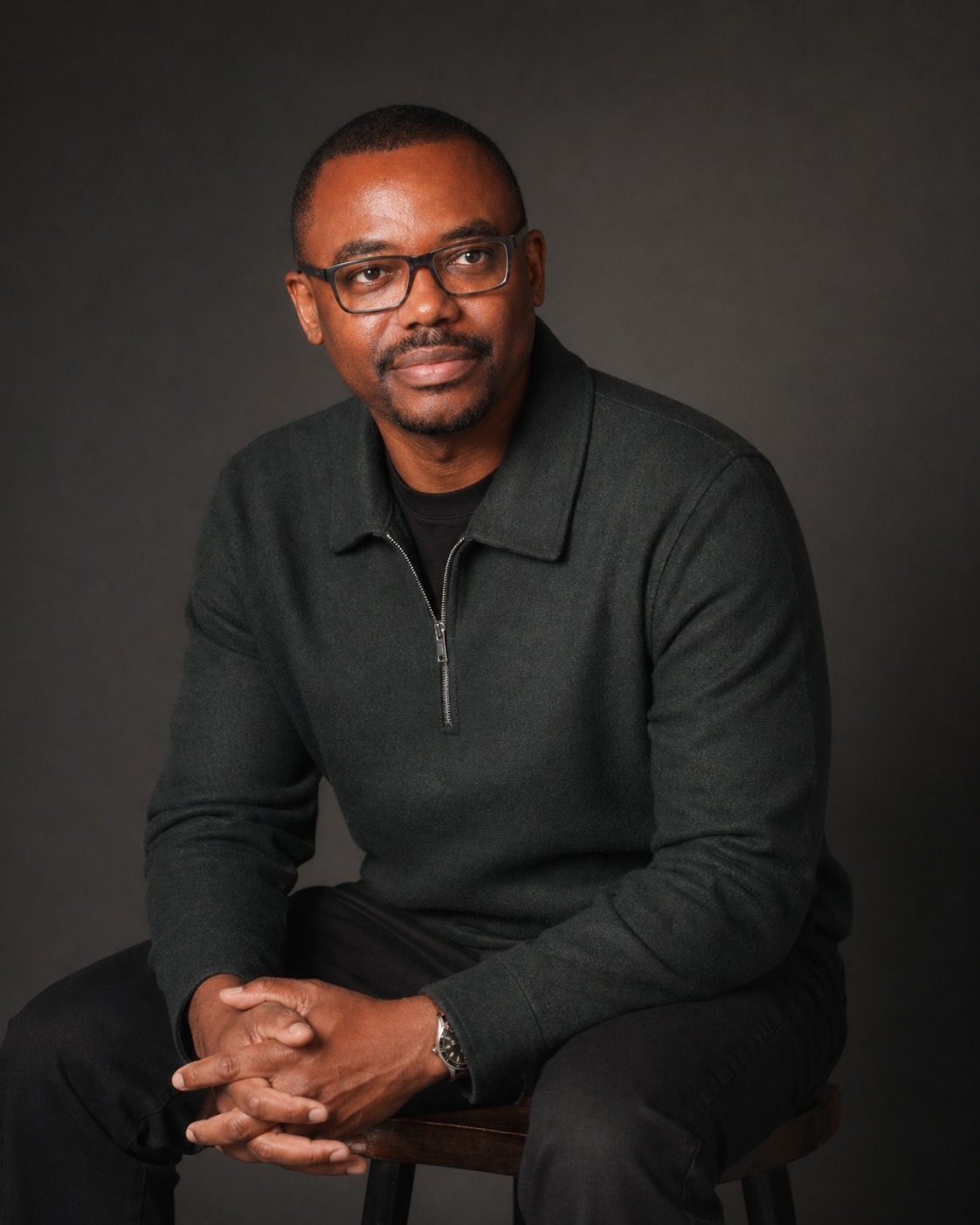
Dr Uche Okere
Dr Uche Okere is a pastor, university academic, coach and founder of Kingdom Builders AI Studio. He helps pastors, authors, speakers and faith-driven builders convert spiritual capital into visible Kingdom impact through message architecture, AI tools, workshops and practical implementation.
Explore the Studio