In this article
A polished chapter can preserve the subject of a sermon while quietly changing what the author actually said. A qualification disappears. An example becomes a personal memory. A possibility becomes a promise. Reading for fluency alone will not reliably expose those changes.
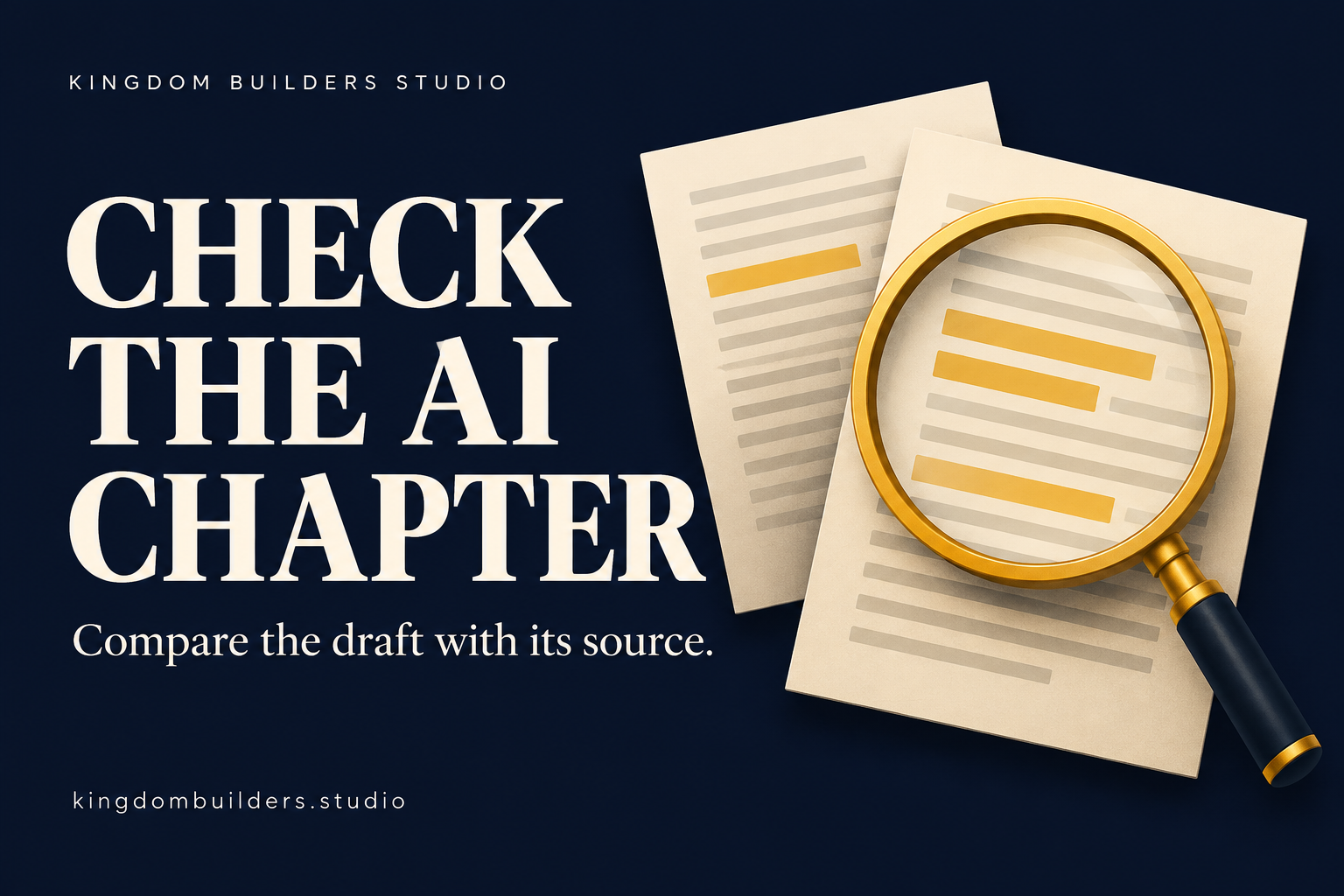
To compare an AI-assisted chapter with its source, check the draft's claims, emphasis and examples, recording anything that is added, omitted or strengthened. Then make an author decision about each material difference. The aim is faithful development, not mechanical reproduction of every spoken sentence.
TL;DR: Keep the source open beside the draft. Check meaning before style. Give additions a visible status, and verify any new factual or theological claims separately.
01Set up a comparison you can repeat
Use a stable source file and a dated draft. Select a manageable passage that includes an explanation and an application. Note its page, heading or recording timestamp so another reviewer can find the same material.
For a transcript, remember that transcription itself can introduce errors. If a sentence seems surprising or decisive, return to the recording where available. Comparing an AI draft with an inaccurate transcript can preserve the wrong wording very carefully.
Read the source once for its main point before examining the draft. Write that point in your own words. This helps you notice a changed emphasis even when most of the original vocabulary remains.
02An illustrative source and draft
The following passages are invented solely for this demonstration. They are not an actual sermon, testimony, client manuscript or recorded output from a particular AI system.
Illustrative source: “A clear invitation can help someone understand the next step. It does not tell us everything about their readiness. We should leave room for questions and avoid treating a quick response as the only sign of seriousness.”
Illustrative draft for review: “When your invitation is clear, people will respond. In my years of ministry, I have found that committed people decide quickly. Give your readers one immediate action and remove every opportunity to hesitate.”
The draft sounds assured. It also changes the source substantially. A useful review makes those differences explicit rather than merely saying that the tone feels wrong.
| Draft element | What the source supports | Review decision |
|---|---|---|
| “People will respond” | Clarity can help someone understand a next step | Remove the promised response; restore the limited claim |
| “In my years of ministry” | No personal experience is supplied | Remove the invented first-person claim |
| “Committed people decide quickly” | The source cautions against this inference | Restore the qualification |
| “Remove every opportunity to hesitate” | The source asks for room for questions | Replace the application with one consistent with the source |
03Produce a faithful revision
A possible revision of the illustrative draft is:
“A clear invitation helps readers understand what they could do next. It should also leave room for questions. A prompt response does not, by itself, tell us how seriously someone has considered the decision.”
This revision retains the central distinction without reproducing every sentence. It makes no claim about the author's experience and offers no guarantee about the reader's response.
The author must still decide whether the wording carries the intended emphasis. A comparison table supports that decision; it does not transfer responsibility to the tool or reviewer.
04Check four kinds of change
First, examine claim strength. Words such as “can”, “often”, “sometimes” and “in this situation” may carry essential limits. Removing them can change the substance of the teaching.
Second, examine origin. Identify quotations, personal stories, statistics and named examples that were not in the source. A plausible detail should not pass into the author's voice merely because it improves the flow.
Third, examine emphasis. A brief application can become the apparent centre of a chapter if the draft expands it extensively. Ask whether the balance of the writing still reflects the message the author intends to teach.
Fourth, examine missing context. A paragraph can be accurate in isolation and misleading when separated from the explanation that qualified it. Look beyond sentence matches to the argument as a whole.
05Separate faithful expansion from unsupported invention
A chapter often needs context that a live audience already possessed. You may need to define a term, explain a transition or make an implied connection explicit. That is legitimate editorial work when the addition is reviewed and supported.
Label proposed additions during drafting. “Author explanation needed here” is better than silently manufacturing the missing substance. Where an external fact would help, record the research question and verify the original source before incorporating it.
The broader guide to fact-checking AI-assisted Christian book content addresses the checks needed for Scripture, quotations, stories and claims. This comparison exercise is one part of that wider review, focused on whether the draft faithfully represents its supplied material.
06Keep a short decision record
For each material issue, record the location, difference, decision and person responsible for resolving it. Use “unresolved” when that is the truth. Do not allow an attractive rewrite to count as verification.
After corrections, read the passage in its chapter. Check that the revised wording fits the surrounding argument and that later paragraphs do not still depend on the removed claim.
Then preserve the reviewed version. If a later generation replaces it, the new text needs review again. Approval belongs to the wording examined, not indefinitely to the topic or file name.
07Questions about reviewing AI-assisted prose
Can I ask AI to check its own work?
It can help identify candidate differences, but you should inspect the actual passages. A second automated answer is not independent proof of accuracy.
Must the chapter use the author's exact wording?
No. Written prose may need substantial restructuring. The review concerns meaning, attribution and responsible development, alongside an author-approved voice.
Is one sample enough to approve the whole book?
No. A sample can reveal problems with a method. It cannot establish that unreviewed chapters are accurate. Plan the review across the manuscript.
08Make the review part of the project
If your message-to-book draft exists but its relationship to the source is uncertain, email Uche with a description of the material and the review you need. Start with the project's condition; do not assume a fluent manuscript is ready for publication.
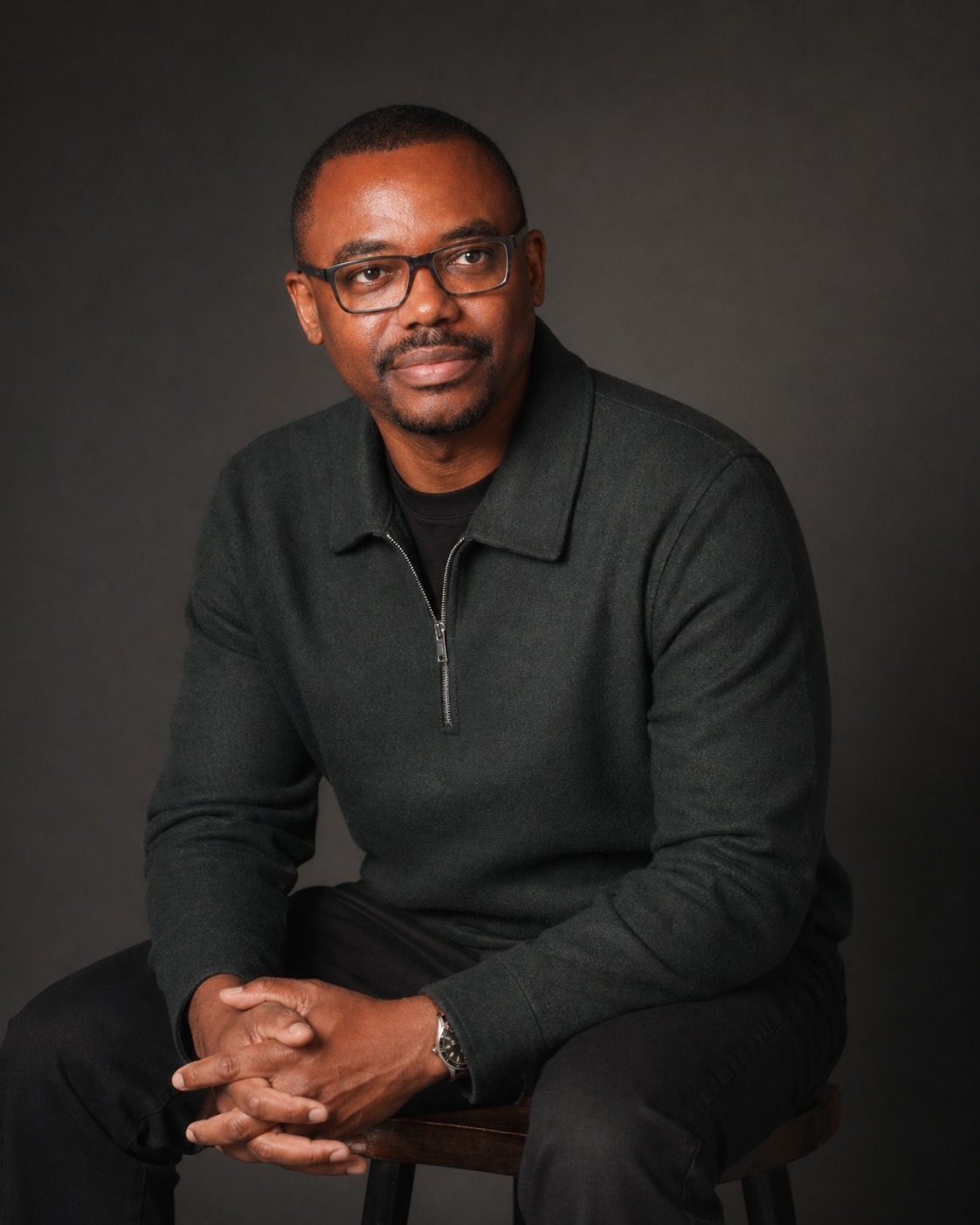
Dr Uche Okere
Dr Uche Okere is a pastor, university academic, coach and founder of Kingdom Builders AI Studio. He helps pastors, authors, speakers and faith-driven builders convert spiritual capital into visible Kingdom impact through message architecture, AI tools, workshops and practical implementation.
Explore the Studio