TL;DR
- Begin with the reading experience you want to support.
- Test whether the material can carry that experience.
- Produce a small sample before committing the whole archive to a format.
In this article
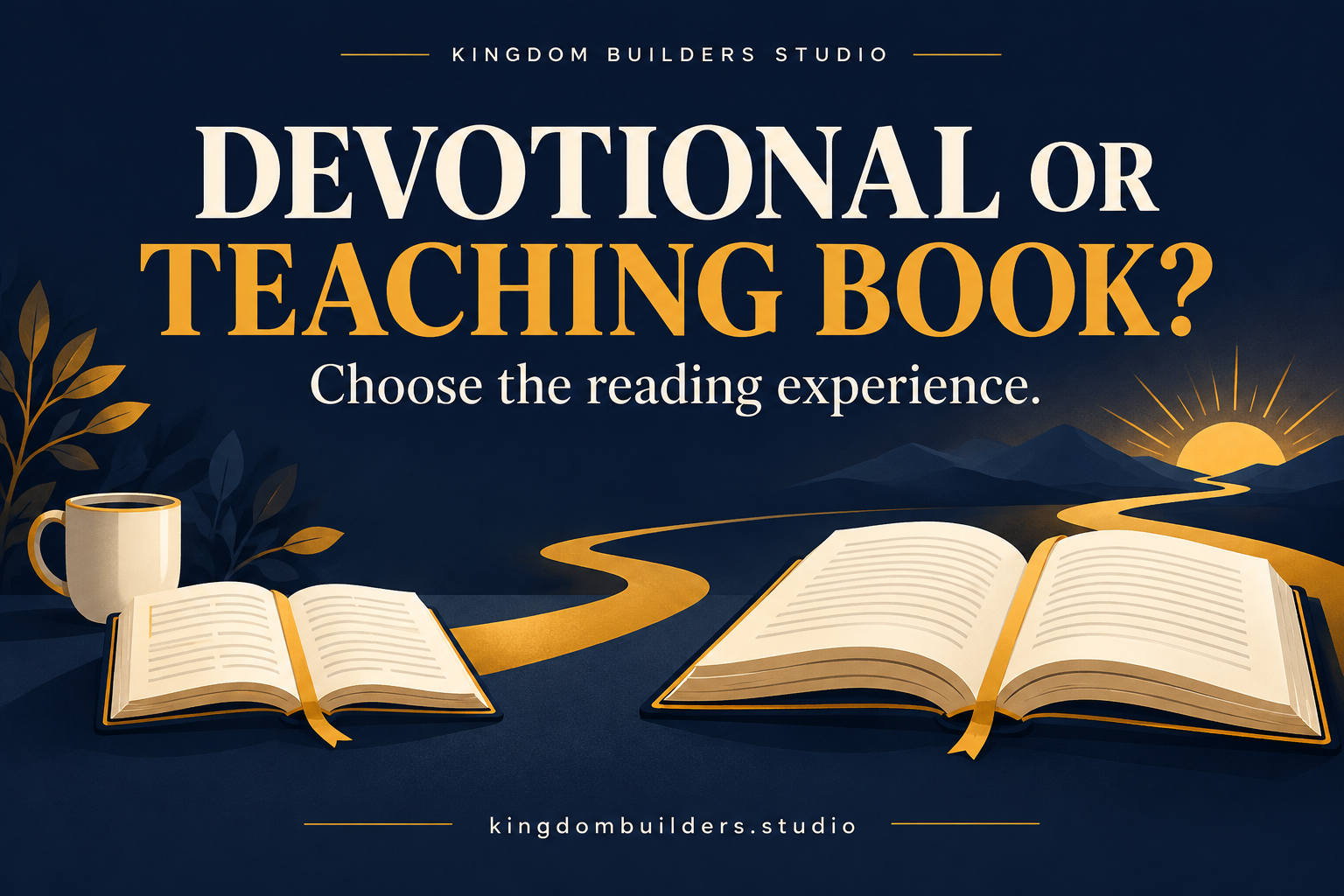
Your choice of a devotional or teaching book begins with the reading experience you want to offer. You may see short reflections in the material, while someone else sees a sequence of substantial chapters. Both possibilities deserve consideration, but they ask the reader to engage in different ways.
Choose a devotional when the main purpose is a repeated rhythm of focused reflection and response. Choose a teaching book when the reader needs a developed explanation that builds across chapters. These are working distinctions, not rigid rules for every publisher or reader.
TL;DR: Begin with the reading experience you want to support. Test whether the material can carry that experience. Produce a small sample before committing the whole archive to a format.
01Describe what the reader will do
Imagine the book in use. Will someone open it for a brief period of reflection before the day's responsibilities? Will a small group discuss one entry together? Will a reader spend longer with an argument that challenges a familiar assumption?
Those situations shape the writing. A short devotional entry needs a manageable focus. A teaching chapter may need space for biblical context, definitions, objections and examples before it reaches an application.
Neither form has a monopoly on depth. A concise reflection can be searching and substantial. A long chapter can remain vague. The question is whether the form gives your particular message enough room and gives the reader a realistic way to engage.
If the intended reader is still broad or uncertain, start with choosing the reader for your Christian nonfiction book. Format choices become easier when you know whose situation you are addressing.
02Look for the shape already present in the material
Read several representative pieces of your source teaching. Does each contain a focused insight that can stand with enough context on its own? Or does its meaning depend on an explanation developed over several sessions?
A series about a complex theological question may lose essential distinctions if divided into isolated daily statements. Equally, a set of carefully developed reflections may become laboured if forced into an extended argument merely to resemble a conventional teaching book.
Do not assume a devotional is the easier option because its entries are shorter. Each entry still needs purpose, careful handling of Scripture and a response that follows from the teaching. Repeated entries also need variety and a reason to belong in the same collection.
03Compare the editorial demands
| Decision | Devotional emphasis | Teaching-book emphasis |
|---|---|---|
| Unit of reading | A focused entry with a useful stopping point | A chapter that advances a larger argument |
| Context | Enough for the entry to be understood responsibly | Space to develop and revisit connected ideas |
| Response | Reflection, prayer or a suitable practice | Understanding, judgement and application across the argument |
| Main risk | Thin or interchangeable entries | Chapters that explain much without a clear progression |
| Sample to test | Several entries, including a difficult one | A chapter plus the proposed chapter sequence |
Use the table as an editorial aid. It does not establish a required length, number of entries or commercial category for your project.
04Try the same material in both forms
Here is a hypothetical design exercise, not an extract from a published book. Suppose your source material explores listening before responding in church leadership.
A devotional entry might concentrate on one moment: the temptation to prepare your answer while another person is still speaking. It could explain a relevant biblical passage in context, invite the reader to notice that habit and suggest a modest practice for the day.
A teaching chapter might examine why leaders misunderstand a concern, distinguish listening from agreement, discuss the responsibilities involved and work through a difficult conversation. Its application emerges from a longer explanation.
Neither version should claim that listening will always resolve conflict. The author must preserve the qualifications the subject requires. The experiment helps you see how much explanation the reader needs before the application becomes trustworthy.
05Be careful with hybrid books
A teaching book can include reflection questions. A devotional can have a clear thematic progression. Those combinations can serve readers well when the dominant experience remains understandable.
Problems arise when a book changes its expectations without warning. One entry takes five minutes, the next assumes detailed study of earlier chapters, and a later section introduces a different audience. The reader cannot work out how to use it.
If you combine forms, explain the pattern in the introduction and maintain it deliberately. Decide what readers may read independently and what needs to be read in sequence. Make navigation reflect those decisions.
06Test a sample before expanding
Give a representative sample to someone who resembles the intended reader. Ask how they used it, where they needed more context and what they understood the piece to be asking of them.
Avoid relying only on “Did you like it?” A positive reaction does not tell you whether the format worked. More useful feedback might reveal that the reader wanted to stop and pray halfway through a long argument, or that a short entry raised a question it never adequately explained.
Revise the form in response to that evidence. You are testing usability and clarity, not forecasting sales.
07Questions about choosing a format
Must a devotional have a fixed number of days?
No universal number determines whether the project is worthwhile. Choose a structure you can sustain with distinct, sufficient material, and describe it accurately to the reader.
Can I turn a teaching book into a devotional later?
Possibly, but it requires fresh editorial work. Selecting excerpts alone may leave entries without context, a coherent focus or a meaningful response.
Which format is more likely to sell?
The format alone cannot answer that. This decision should begin with reader need, the strength of your material and the reading experience you can responsibly deliver.
08Decide the form alongside the promise
Bring your existing teaching and your uncertainty about format to the free Live Book Brief page. Check the current session details and begin shaping a book whose form serves the message.
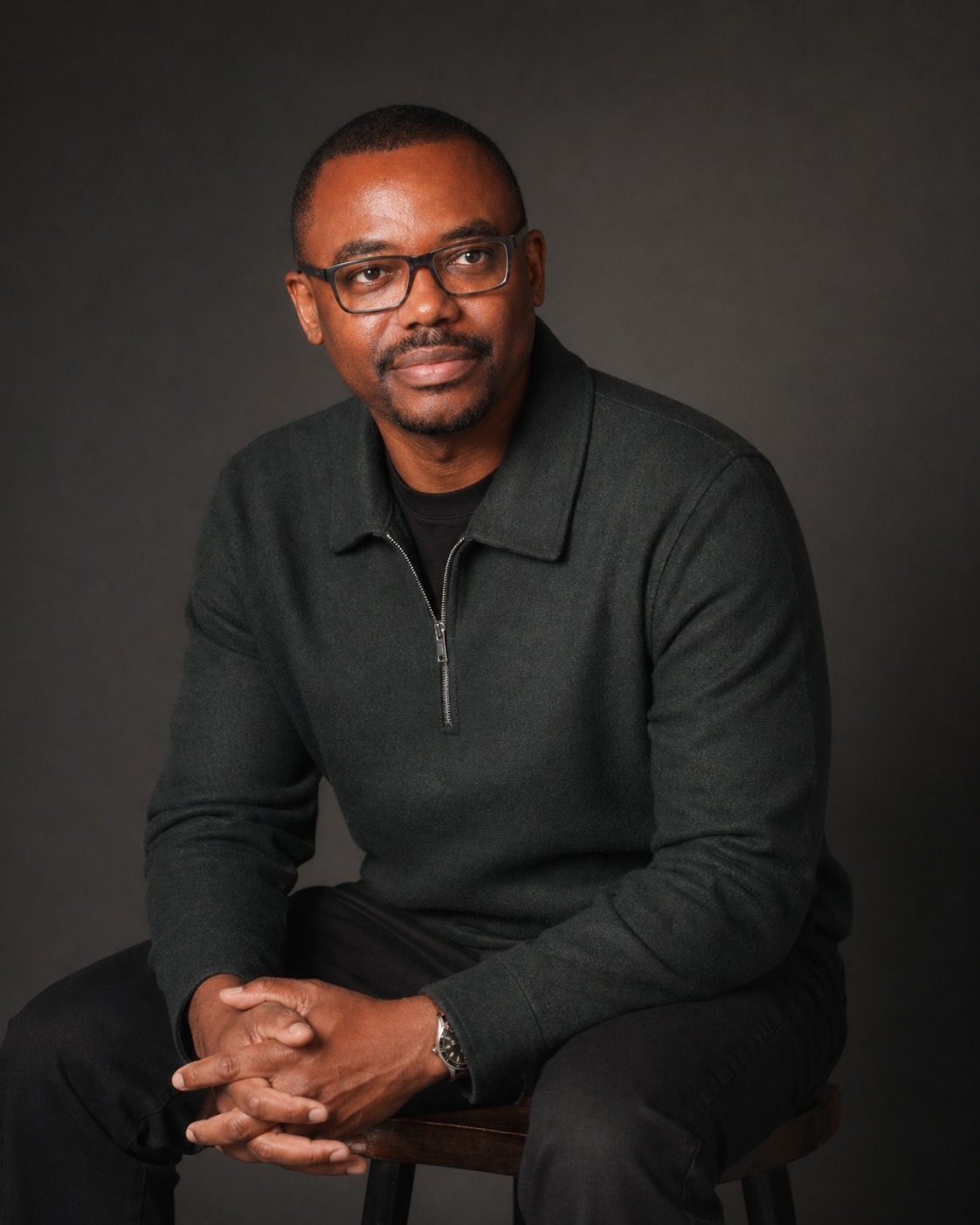
Dr Uche Okere
Dr Uche Okere is a pastor, university academic, coach and founder of Kingdom Builders AI Studio. He helps pastors, authors, speakers and faith-driven builders convert spiritual capital into visible Kingdom impact through message architecture, AI tools, workshops and practical implementation.
Explore the Studio