TL;DR
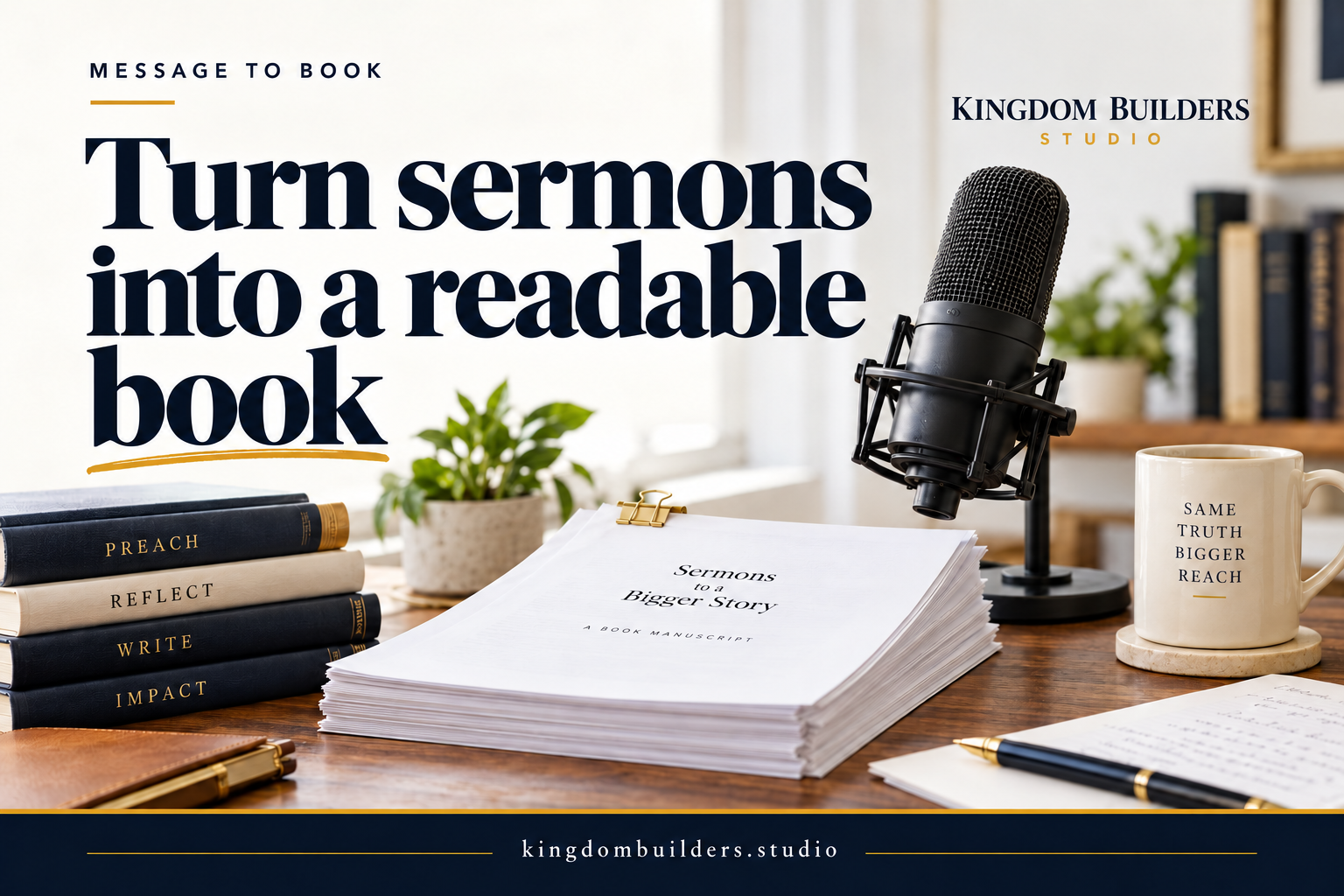
- Many Christian authors, especially pastors, mistakenly believe their sermons can directly become books.
- This overlooks a critical distinction: sermons are revelation delivered, books are revelation structured for transformation.
- This essay explains how to bridge The Capital Conversion Gap™ by applying Message-to-Market Architecture to your existing sermon capital, converting it into a book that truly serves your audience and extends your ministry influence beyond the pulpit.
- Ignoring this distinction limits your impact and leaves significant Kingdom capital unconverted.
In this article
It is a common sight in my work to often meet pastors and ministry leaders with hard drives overflowing sermon notes, transcripts, and outlines, years of faithfully delivered revelation all sitting dormant as they struggle to turn their sermons into books. These are not merely digital files; they are a profound accumulation of spiritual capital. But for many, this capital remains locked, unable to convert into the broader, sustained impact a book can offer. The problem isn't a lack of message, but a fundamental misunderstanding of the form that message must take to reach new audiences and fulfil its Kingdom potential.
01Why Turning Sermons Into Books Requires More Than Editing
I keep seeing this pattern with earnest, gifted communicators. They preach a powerful sermon series, receive enthusiastic feedback, and then declare, "This should be a book!" And indeed, it should. But the mistake comes in how they approach the conversion. They often treat the sermon transcript as a draft manuscript, believing that simply editing and compiling will produce a compelling book. This is a category mistake, and it creates what I call "message dumps"—books that are rich in content but poor in structure, leaving readers inspired but ultimately undirected.
A sermon, by its very nature, is an oral, time-bound experience. It is designed for a specific moment, a specific audience, often within the context of communal worship. Its power lies in the speaker's presence, the live interaction, the call to immediate response. A book, however, is a solitary, self-paced journey. It requires a different kind of architecture, a different pacing, and a different approach to engagement. It must anticipate questions, provide deeper context, and guide the reader through a process of transformation, often without the benefit of the author's live voice.
This is where The Capital Conversion Gap™ becomes starkly visible. The pastor has immense capital—revelation, experience, mastery of scripture, the ability to articulate profound truths. But without the right architecture, this capital cannot convert into the specific asset of a book that can travel further, minister longer, and build a lasting legacy beyond the pulpit. The raw material is there, but the manufacturing process is misunderstood.
02From Pulpit to Pathway: Message-to-Market Architecture for Authors
Closing this gap requires intentional Message-to-Market Architecture. It means understanding that a book is not merely a collection of thoughts; it is a structured pathway designed to take a reader from their current state to a desired future state. It’s a tool for transformation, not just information. This shift in mindset is critical.
When I sit with believers wrestling with this, I emphasize that the goal is not to diminish the power of the sermon, but to expand its reach. Think of your sermon series as the rich ore in the mine. You wouldn't just dump the ore on the market and expect its full value. You refine it, shape it, and turn it into something useful and valuable. That's what Message-to-Market Architecture does for your sermon capital.
Here are some key distinctions to consider as you convert your sermon capital into a book:
- Audience: Who is the book for, specifically? While your sermon may be for your congregation, a book can target a narrower, more defined audience with a particular problem or aspiration. Tailoring your message to this specific reader is paramount.
- Pacing: Sermons often build to a crescendo and a call to action. Books allow for deeper dives, slower contemplation, and the introduction of complex ideas over several chapters. The rhythm is different.
- Engagement: A sermon engages through rhetoric and presence. A book engages through narrative, reflection questions, exercises, and structured arguments that unfold over time.
- Outcome: A sermon often aims for immediate inspiration or conviction. A book aims for sustained, internal change and practical application over the long term.
03The Role of Purpose-Built AI in Book Conversion
For years, this conversion process was arduous, demanding months or even years of painstaking writing and editing. But the landscape has changed dramatically with purpose-built AI. At Kingdom Builders Studio, we've developed tools specifically to help Christian messengers navigate this journey, ensuring their unique voice and theological integrity remain central.
Our Message-to-Book Builder™ is designed precisely for this challenge. It doesn't write your book for you, but with you, acting as a tireless architect. You feed it your sermon transcripts, outlines, or key teachings, and it helps you:
- Diagnose your message: Identify the core transformational pathway embedded within your existing content.
- Structure for impact: Generate chapter outlines, key arguments, and logical flow that moves a reader through a journey, not just a series of points.
- Refine your content: Translate spoken language into written prose, suggesting ways to expand on ideas, clarify concepts, and add reflective elements suitable for a book.
- Maintain your voice: Your source material and explicit instructions can guide the draft. You must still check its theology, accuracy and voice before using it.
This isn't about replacing the author; it's about empowering them to build faster and more effectively. It addresses the practical barriers that often leave valuable spiritual capital sitting on a hard drive, unconverted and underutilized. It's a pragmatic response to the Great Commission, recognizing that discipleship happens not just from the pulpit, but also through reproducible, accessible resources.
04Beyond the Book: A Starting Point, Not a Finish Line
One of the five common mistakes I see Christian authors make is treating the book as a finish line. This is a limiting perspective. A book, especially one born from your unique message, is actually a starting point for a broader ecosystem of impact. It's the cornerstone of your Message-to-Market Architecture.
Once you have a well-structured book, it becomes the foundation for:
- Workshops and courses: The chapters become modules, the concepts become exercises.
- Coaching programs: The book outlines the journey your clients will take with you.
- Speaking engagements: The book provides credibility and a tangible takeaway for your audience.
- Further content creation: Social media posts, blog articles, and video scripts can all be generated from your book's core themes.
This is the true power of converting your sermon capital into a book: it creates an asset that multiplies your message and expands your Kingdom influence far beyond the walls of your church or the reach of your immediate platform. It allows you to make disciples "as you go" (Matthew 28:19), not just from a fixed location. It is a strategic act of stewardship, ensuring that the revelation God has given you is not confined, but unleashed.
05Your Next Move
If you have years of sermon notes, teachings, or God-given insights sitting unorganized, it's time to see them for what they truly are: unconverted Kingdom capital. The first step is to acknowledge the distinction between a sermon and a book. The second is to embrace the architectural process required to bridge that gap.
Consider how Message-to-Book Builder™ within the Kingdom Builders AI Studio can serve as your personal architect, helping you transform your delivered messages into structured, transformational books. This isn't just about writing a book; it's about building a pathway for lasting Kingdom impact.
This command to teach and make disciples is not limited to Sunday mornings. It extends to every medium and every opportunity. Your book can be a powerful instrument in that ongoing work.
Ready to convert your sermon capital into a Kingdom-expanding book? Explore the Message-to-Book Builder™ and other tools designed to help you transform your message into a clear pathway for impact. Visit the free Live Book Brief session to begin.
06FAQ
Can I really use my old sermon transcripts to write a book?
Yes, absolutely. Your sermon transcripts are rich capital. The key is to not treat them as a finished manuscript, but as raw material that needs to be restructured and refined with Message-to-Market Architecture to become a coherent, transformational book.
Will AI write my book for me, or will it still sound like me?
AI-assisted drafting can help organise and revise your source material, but it cannot guarantee your voice or theology will remain intact. Compare the draft against your teaching, verify its claims and edit it yourself before publication.
07Related reading
Uche Okere
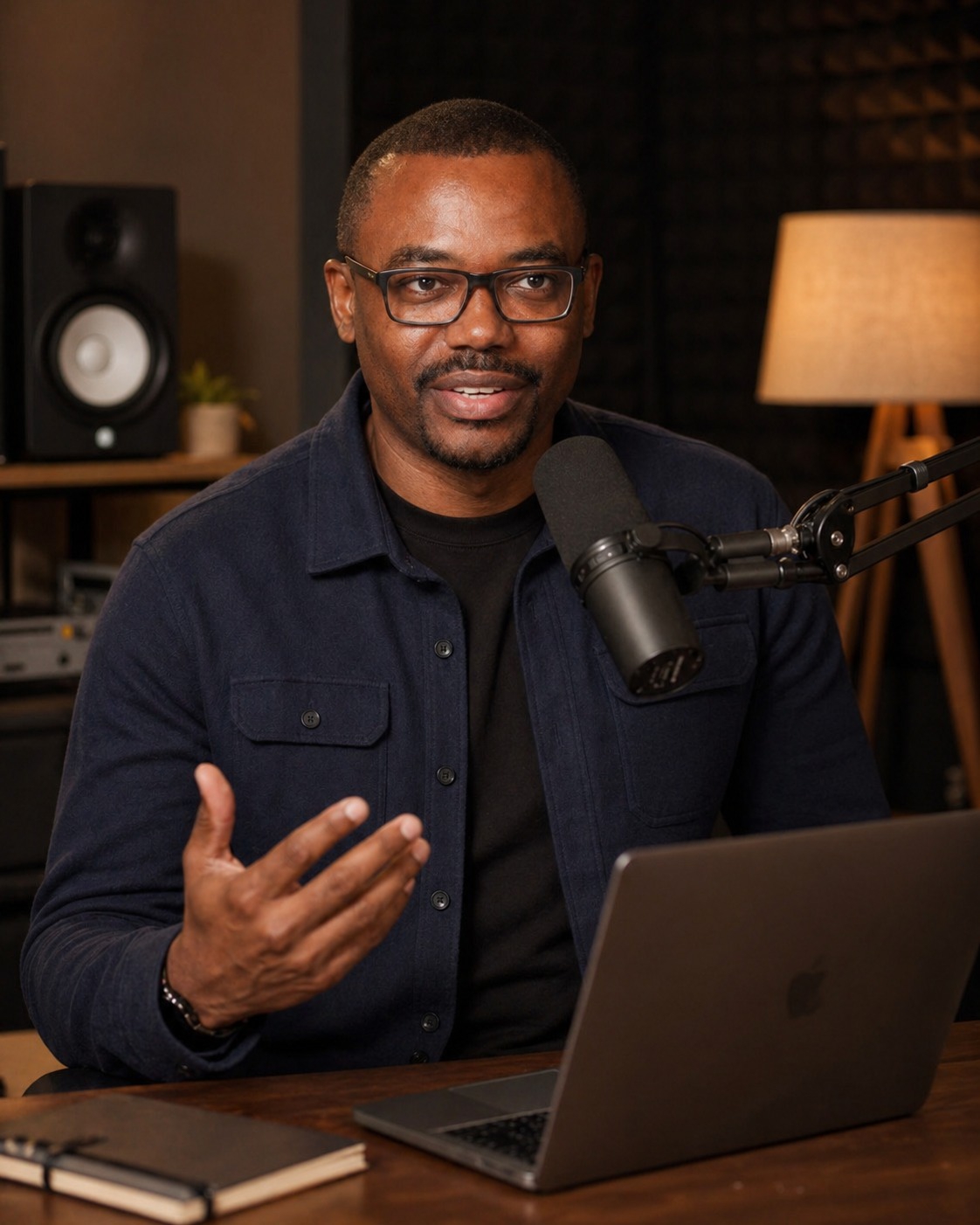
Dr Uche Okere is a pastor, university academic, coach and founder of Kingdom Builders AI Studio. He helps pastors, authors, speakers and faith-driven builders convert spiritual capital into visible Kingdom impact through message architecture, AI tools, workshops and practical implementation.
Explore the Studio