TL;DR
- Choose the series with a clear reader need, a coherent central conviction and manageable gaps.
- Popularity and length alone cannot tell you which book to write first.
In this article
- 01Begin with the question the book will answer
- 02Look for the conviction that holds the series together
- 03Ask what the reader can do with the teaching
- 04Compare the material you actually have
- 05Separate an enduring message from a temporary moment
- 06Choose a project you can carry through this season
- 07Make a short book brief before committing to chapters
- 08Key takeaways
- 09FAQ
- 10Decide what you are building
Which of your sermon series would you choose if you could finish only one book this year?
That question asks you to do something more difficult than gather content. It asks you to decide where your attention belongs. When several messages matter deeply to you, choosing one can feel like neglecting the others, even though a clear choice may be what allows any of them to become a finished resource.
To choose a sermon series for a book, look for a specific reader need, a central conviction you can explain clearly, enough distinct material to develop it, and a scope you can realistically complete. The most useful choice will not necessarily be your longest series or the one that received the warmest response in the room.
For me, the idea behind Temple People grew from a question that had stayed with me through years of pastoring: why can people spend years in church and still remain largely unchanged? Teaching through Ephesians gave that concern a clearer biblical focus. In Ephesians 2:19–22, Paul describes believers being built together as God's dwelling place. That relationship between a pastoral question and a scriptural vision gives the book a reason to exist.
Your subject may be different, but the principle is useful. Look for the concern that your teaching can help a reader understand and respond to, then ask which body of material carries it most clearly.
01Begin with the question the book will answer
A broad subject is a starting point. "Prayer", "leadership" or "purpose" tells you the general area, but it leaves you with a great deal still to decide. A book becomes easier to assess when you can name the question it will address within that area.
A series on prayer might help believers who have lost confidence after disappointment. It might teach new Christians how to develop a regular prayer life. It might examine prayer in the life of a local church. Those are related subjects, but they create different books, with different examples and different expectations of the reader.
Try writing a short paragraph that explains why the book is needed. Describe the situation the reader faces, the misunderstanding or difficulty your teaching addresses, and what clearer understanding could make possible. If every sentence stays broad enough to apply to almost anyone, keep working on the paragraph.
You are not reducing the reach of the message by making this clear. You are giving the book somewhere to begin. A reader needs a reason to keep reading that is more concrete than being told the subject is important.
02Look for the conviction that holds the series together
A series title can create the appearance of unity even when the individual messages do different jobs. Before choosing it for a book, ask what central conviction connects the material beneath the title.
Can you explain how the opening teaching leads into the later messages? Does each part add something, or do several sermons return to the same conclusion? Are you drawing a coherent argument from the biblical text, or collecting interesting observations that happen to share a theme?
These are editorial questions, not a judgement on whether the original preaching was worthwhile. A local church may need repetition, encouragement for a particular season, or a message that responds to something happening in the congregation. The book may need a different arrangement because its reader has arrived with a different context.
I would therefore write a provisional central claim before selecting chapters. For a hypothetical book on serving in church, that claim might be: belonging to a local church includes learning to contribute responsibly to its shared life. You can then examine whether the series develops that conviction with sufficient explanation and application.
Keep the claim provisional enough to correct. As you return to Scripture and your sources, you may discover that the strongest version of the book is narrower, or that your original wording promises more than the material can establish.
03Ask what the reader can do with the teaching
A book can deepen understanding without becoming a workbook. Even so, you should be able to explain how that understanding might affect the reader's life.
If the series is about Christian formation, what would change in the way someone participates in church, receives correction or serves others? If it concerns work and calling, how might it help someone approach ordinary professional responsibilities with greater clarity? The application should follow from what you have actually taught.
This is where pastoral experience can strengthen a book. You know the questions people ask after the meeting and the places where an idea becomes difficult to practise. That knowledge can help you identify the explanation a reader needs next. Use it carefully, without inventing conversations or exposing someone else's circumstances to make the writing more vivid.
I also want to be careful about what we promise. A book may help a reader understand, reflect, practise or make a more informed decision. It cannot guarantee that every reader will respond, or that every difficult situation will resolve in the same way. A credible promise honours both the usefulness of the teaching and the complexity of people's lives.
04Compare the material you actually have
Shortlist two or three series. More than that can turn a useful decision into another archive project. For each candidate, read the outlines and sample the recordings before relying on your memory of how the series felt when you preached it.
Consider the following questions side by side:
| Question | What you are looking for |
|---|---|
| Who needs this book? | A reader and situation you can describe clearly. |
| What holds it together? | A central conviction that the material develops. |
| What distinct substance is available? | Explanations, biblical study and applications that add to each other. |
| What is missing? | Specific gaps you can reasonably address. |
| Why begin with this one? | A present reason to give it your attention. |
Do not turn the exercise into a competition for the highest score. A weak central argument should not disappear inside an impressive total because the recordings are tidy and the title sounds attractive. Use the questions to see the differences clearly enough to make a judgement.
One candidate may be substantial but require research you cannot currently give it. Another may be timely but too dependent on a particular event. A third may have a clear question, accessible sources and a manageable set of gaps. That third option may be the wisest first project, even if the others remain important to you.
If the difficulty is deciding whether the source material is substantial enough, the broader guide to turning sermons into books will help you think through the adaptation work. Selection is the decision about which project deserves that work now.
05Separate an enduring message from a temporary moment
Some sermons address a moment so closely that much of their force depends on knowing what happened that week. They can still contain useful teaching, but you need to identify what remains meaningful when the original occasion is removed.
Imagine a message preached during a church relocation. It might contain enduring material about shared responsibility, sacrifice and participation in God's work. It might also contain details of a building project that a wider reader does not need. The potential book would require you to develop the enduring teaching and reconsider the temporary framing.
Other material may be better kept as a shorter reflection, an article or a resource for your own congregation. Choosing that form is a legitimate editorial decision. Stewardship includes judging what each message is suited to become.
The question is whether the reader can enter the material without having attended the original services. Where they need background, can you provide it naturally? Where the point depends entirely on a local circumstance, is that circumstance suitable to explain in a book?
06Choose a project you can carry through this season
Your capacity belongs in the decision. Pastors, coaches and professionals often develop books alongside responsibilities that cannot simply be set aside. A sensible first project takes those responsibilities seriously.
Look at the work between the material you have and the manuscript you want. Do you need to recover recordings, revisit substantial biblical questions, obtain permission for personal stories or develop whole sections from the beginning? Are you able to give that work sustained attention now?
A smaller project can still carry weight. You might begin with a focused book that serves one clear need and return to the broader treatment later. Equally, if a larger book is the right assignment for this season, be honest about the time and support it will require.
I would resist choosing solely on the basis of what appears easiest to sell. I would also resist treating commercial usefulness as an irrelevant question. A book intended to serve readers beyond your congregation needs a clear reason for those readers to care. The order matters: understand whom the resource serves and why it is useful, then consider how to help those people discover it.
07Make a short book brief before committing to chapters
Once you have chosen a likely series, write a brief that states the reader, the central question, the book's promise and the material you will use. Add the subjects you intend to leave outside its scope. That final decision can save you a great deal of wandering later.
Then sketch a possible chapter progression. Give each chapter a job in the argument and attach the source material that supports it. Where a chapter has no support, mark the gap honestly. Where several chapters do the same job, consider combining them.
The work of bringing scattered sermons into a cohesive book becomes more manageable after this choice. You have a basis for deciding what belongs, what needs development and what should wait for another project.
08Key takeaways
- Choose a series around a clear reader need and a coherent central conviction.
- Compare the material itself, including its gaps, rather than relying on the response it received when preached.
- Consider the work required and the capacity you have in this season.
- Use a short book brief to turn the selection into a defined project.
09FAQ
Should I choose my most popular sermon series?
Audience response is useful information, but it is only one consideration. Check whether the series contains a coherent argument, distinct substance and a clear purpose for readers who were not present when you preached it.
Can I combine material from different sermon series?
Yes. The material can come from different occasions if it supports one book's purpose. You will need to explain the connections and remove repetition so the result reads as a coherent work.
What if two series both look promising?
Compare the missing work and your current capacity. Choose one primary project, record the idea for the other, and give yourself permission to finish the first before developing both at once.
10Decide what you are building
If you have several possible books in your archive, the Free Live Book Brief session is a place to begin clarifying one of them. Bring the series you are considering and the question you hope the book will answer.
We can work towards a defined reader, promise and chapter shape, so that your next step follows a decision you understand.
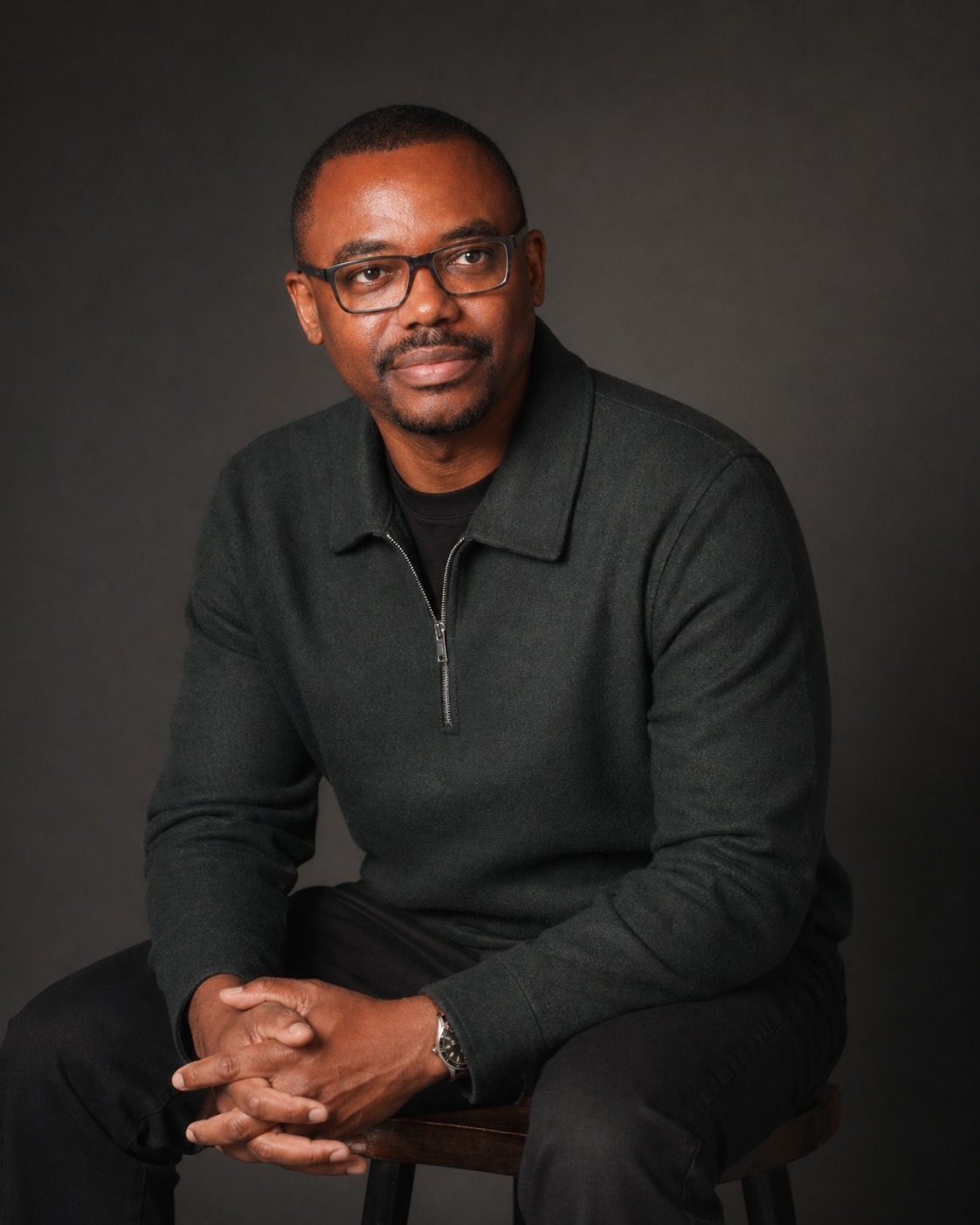
Dr Uche Okere
Dr Uche Okere is a pastor, university academic, coach and founder of Kingdom Builders AI Studio. He helps pastors, authors, speakers and faith-driven builders convert spiritual capital into visible Kingdom impact through message architecture, AI tools, workshops and practical implementation.
Explore the Studio