TL;DR
- Keep a clear distinction between originals and working copies.
- Record what each source contributes to the proposed book.
- Resolve important gaps instead of expecting AI to fill them convincingly.
In this article
- 01Start with the agreed book direction
- 02Preserve the originals
- 03Create a simple source register
- 04Correct the errors that change meaning
- 05Mark which sources should take priority
- 06Make a gap list
- 07Finish with a readiness decision
- 08Questions about source preparation
- 09Check your readiness before committing
A folder full of material can still leave you unprepared to write a book. The difficulty is often that you cannot tell which version is current, where a quotation came from or which teaching actually supports the chapter you want to develop.
Preparing source material for a book-writing Sprint means making the substance usable. Gather the originals, identify the most relevant pieces, record what each contributes and make the gaps visible before production begins.
You are not trying to finish the book in advance. You are preparing to make better decisions when the work becomes concentrated.
In brief
- Keep a clear distinction between originals and working copies.
- Record what each source contributes to the proposed book.
- Resolve important gaps instead of expecting AI to fill them convincingly.
01Start with the agreed book direction
The archive should be selected for the book, rather than the book expanding indefinitely to accommodate the archive.
Write a short statement of the central message, intended reader and proposed scope. If these are still unclear, begin with a Book Brief. If they are already established, use them to decide which sources deserve attention.
A teaching on forgiveness may contain a useful illustration for a book about church relationships. That does not mean the entire teaching needs to become a chapter. Select the contribution that serves the agreed argument.
For help with that earlier decision, read which sermon series should become your first book.
02Preserve the originals
Keep original recordings, notes and documents in a clearly named folder. Create separate working copies for transcription corrections, extracts and editorial notes.
Use filenames you can understand later. A name such as “2026-08-12_Belonging_TeachingNotes_Original” tells you more than “final_new_2”. If you revise a working document, include a version or date so you can distinguish it from the source.
This need not become an elaborate filing project. The aim is to prevent uncertainty when you need to check what was actually said.
Do not overwrite a recording transcript with a rewritten chapter. They serve different purposes, and the original remains useful when reviewing fidelity.
03Create a simple source register
For each selected item, record its title, location, format, main contribution and any concern that needs attention.
Here is an illustrative register:
| Source | Contribution | Review needed |
|---|---|---|
| Teaching notes on belonging | Defines participation in church life | Expand two outline-only points |
| Transcript on service | Explains contribution and capacity | Check an unclear quotation |
| Unfinished chapter | Provides a possible opening argument | Compare with later teaching |
| Reflection questions | Supports reader application | Remove duplicated questions |
The register shows you more than how many files exist. It reveals where the argument is supported and where you are relying on an undeveloped heading.
You can add a proposed chapter column once the book plan is clearer. At this stage, avoid forcing each source into exactly one chapter. A source may support several parts of the manuscript.
04Correct the errors that change meaning
Transcripts can contain mistaken names, missing words and inaccurate Scripture references. Focus first on errors that would distort the teaching or confuse the book plan.
Listen again where the transcript is uncertain. Check a quotation against its source. If a sentence remains unclear, mark it for the author rather than smoothing it into something plausible.
An editor or AI tool can make an incorrect sentence sound remarkably fluent. That is why preparation should preserve uncertainty until it is resolved.
You do not need to polish every spoken phrase before the Sprint. A rough but accurate transcript can be more useful than an elegant rewrite that has quietly changed the argument.
05Mark which sources should take priority
Your teaching may have developed over time. An older sermon might use language you would now qualify, or an unfinished chapter may reflect a position you have since refined.
Make that clear. A short note such as “Use the later explanation on this point; the earlier transcript needs qualification” can prevent an avoidable conflict.
This is particularly important when several sources discuss the same theological question. A system should not decide that the most frequently repeated formulation is necessarily the one you want in the book.
Your current authorial judgment must remain visible.
06Make a gap list
Separate missing material from missing organisation.
If you have taught the subject extensively but the files are scattered, the immediate work is retrieval and selection. If the proposed book promises an explanation you have never developed, you need additional substance.
A gap list might include a missing definition, an unexplained transition, a claim requiring evidence or a practical example the author must supply.
Do not hide these gaps by writing “AI to expand”. Expansion should develop a supported idea. It should not invent experience, evidence or doctrine to make the manuscript appear complete.
Our fact-checking guide explains how to review those risks in the draft itself.
07Finish with a readiness decision
Ask whether the selected material supports the promised book, whether the main uncertainties are known and whether you can participate in the production work.
You do not need absolute certainty. You do need enough clarity to avoid spending the live sessions searching for files or discovering that the central argument is missing.
Where readiness is partial, narrower scope may be wiser than a larger promise. A focused short book can be a substantial achievement when it does the work its reader needs.
Key takeaways: Prepare for decisions, not just uploads. Preserve originals. Make source priorities and gaps explicit.
08Questions about source preparation
Should I upload my entire archive?
Begin with material relevant to the chosen book and follow the programme's requirements. More files are not automatically more helpful.
Must my transcripts be perfectly edited?
No. Prioritise accuracy, clarity and source identification. Spoken-language editing can happen during chapter development.
Can I include other people's material?
Identify it clearly and share only what you are entitled to use. Do not present borrowed material as your own teaching.
09Check your readiness before committing
If you want guided help moving suitable material into a complete first draft, read the Sprint scope and readiness requirements. Check whether applications remain open.
If the published cohort is closed, or you are unsure whether your material is ready, email me about your project. Tell me what you have, what is missing and the book you want to develop.
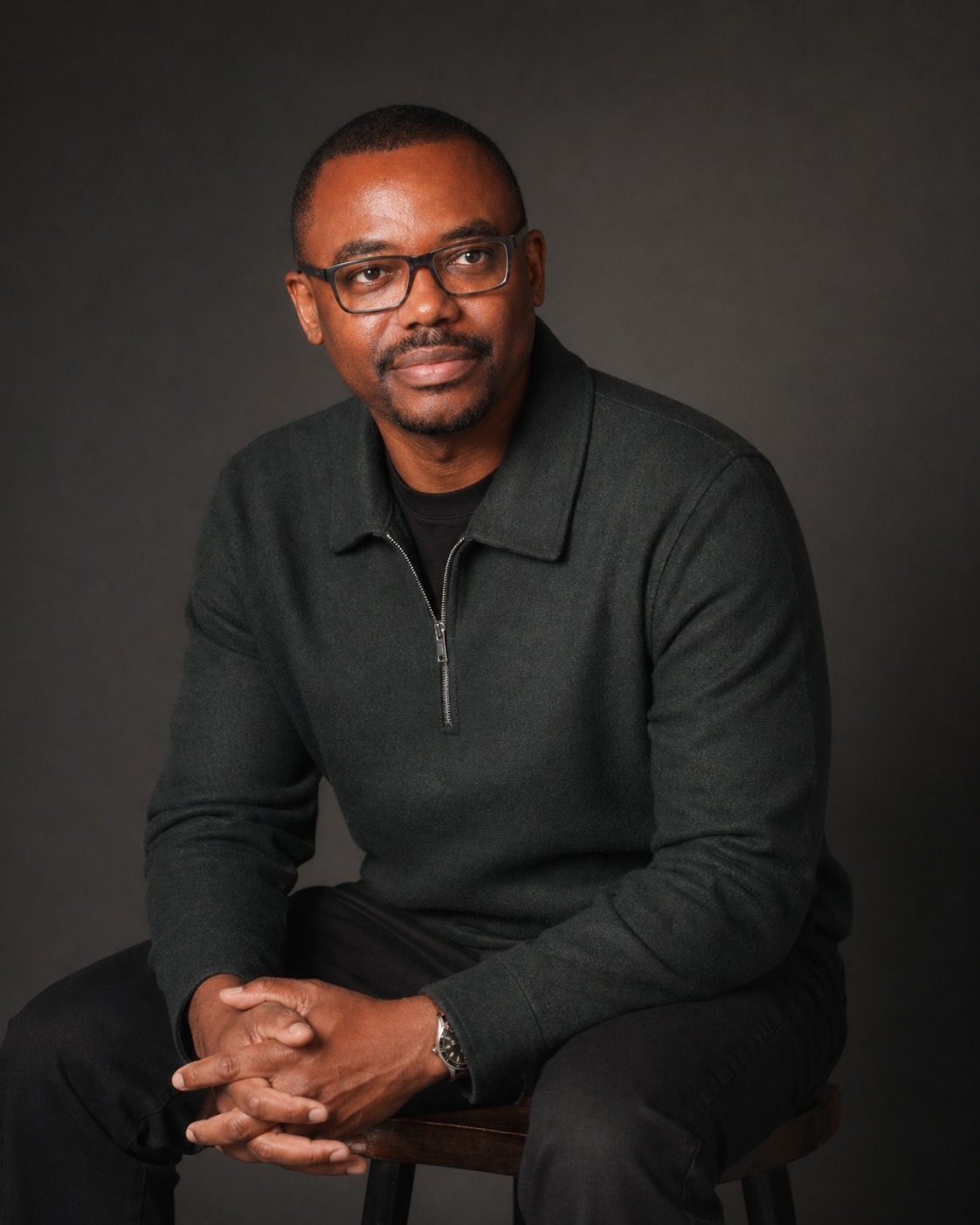
Dr Uche Okere
Dr Uche Okere is a pastor, university academic, coach and founder of Kingdom Builders AI Studio. He helps pastors, authors, speakers and faith-driven builders convert spiritual capital into visible Kingdom impact through message architecture, AI tools, workshops and practical implementation.
Explore the Studio